Trenton Water Works Launches New Phases of Lead Service Line Replacements
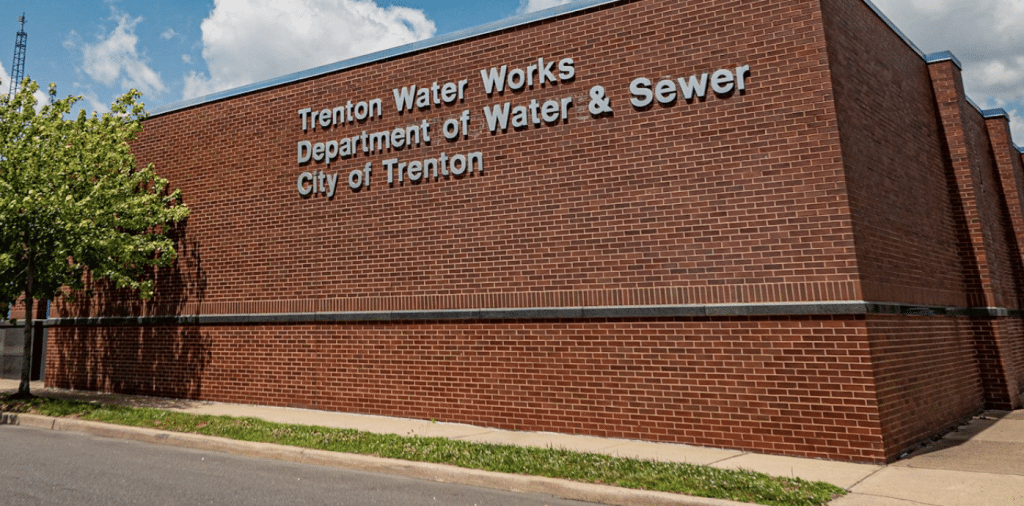
Trenton Water Works (TWW) recently announced that, through the public contracting process, it has selected two vendors—Roman E&G and Dewcon, Inc.—to remove approximately 2,000 lead service lines from its distribution system and private homes in Trenton, Ewing Township, and Lawrence Township, beginning this month.
“We are committed to removing all lead infrastructure from our system by 2031,” said Sean Semple, director of the City of Trenton’s Department of Water and Sewer, which operates Trenton Water Works, one of the nation’s oldest public water systems. “We are actively planning, securing funding for, and executing multiple phases of a $175 million, multi-year Lead Service Line Replacement Program to achieve this vital public‑health goal.”
Roman E&G has begun canvassing neighborhoods in South Trenton, North Trenton, and East Trenton, knocking on doors to gain access to homes, verify service line materials, and schedule replacements, where necessary. Roman’s contract with TWW calls for the replacement of approximately 1,550 lead service lines as part of Phases 5A and 3 of the Lead Service Line Replacement Program. Phase 3 is funded by a $5.53 million grant from the U.S. Environmental Protection Agency.
Dewcon, Inc. has been awarded Phase 5C to work in Ewing Township and Lawrence Township, focusing on neighborhoods where street paving is scheduled to occur next year. The company will remove approximately 450 to 500 lead service lines from public and private property. This phase of work is supported by a $20 million loan with principal forgiveness from the New Jersey Infrastructure Bank (I-Bank), a State Revolving Fund that assists water systems with infrastructure project funding.
Dewcon, Inc. is close to completing Phase 4 of the program, during which more than 1,100 lead service lines were removed from TWW’s system and private properties in Hamilton Township. That work, a $7.2 million investment in improving TWW’s distribution system in Hamilton Township, was undertaken in close coordination with township officials to incorporate the local road paving program.
Customers and residents within TWW’s service area can check whether their home has a lead service line by visiting twwleadprogram.com, where they can view the information TWW has on record for their property. The website also includes a self-survey tool that allows customers to upload well-lit photos of their service line to help TWW update its lead service line inventory. Additionally, TWW is working under contract with engineering firms Arcadis and Suburban Consulting Engineers (SCE) to inspect private property pipe materials and provide technical engineering assistance.
As of August 2025, approximately 20,000 properties with known lead service lines remain in the TWW system. New Jersey regulations require all water utilities to remove all lead infrastructure from their systems by 2031.
Since launching the Lead Service Line Replacement Program in 2019, Trenton Water Works has invested $70 million to remove more than 11,000 lead service lines from its system and private homes at no cost to property owners. Making the program free and mandatory—a key affordability measure—received state approval and was enacted by municipal ordinance, covering all customers in TWW’s service area.
Removing a lead service line typically costs between $5,000 and $10,000 per property, and customer cooperation is essential to the success of this multi-year Lead Service Line Replacement Program.
There is no sign-up list. Every property confirmed to have a lead service line is eligible for replacement, subject to funding availability and municipal road-paving schedules, which are affected by road-opening moratoriums. Customers whose service line material is unknown are encouraged to visit twwleadprogram.com to follow the instructions to check their service line and upload a photo for inclusion in TWW’s inventory database.
According to the U.S. Environmental Protection Agency, new data from mandatory lead service line inventories show about 4 million lead service lines in the United States, revised from a prior estimate of 9.2 million. These lines, which connect water mains to homes, are concentrated in older areas, particularly Florida, Illinois, Ohio, and Pennsylvania. New Jersey has about 350,000 lead service lines, all of which must be replaced by 2031 under state law. More than 1 million service lines have unknown materials, creating a major obstacle for water systems aiming to eliminate lead infrastructure. The problem stems from the use of lead in pipes and solder before federal bans in 1986, and split ownership between utilities and property owners has slowed replacement efforts.
“Removing every lead service line is our top priority,” Semple said. “We need residents’ cooperation to identify private-side lines so we can replace them quickly and protect community health.”