Dr. Jack Washington and the Courage to Preserve Trenton’s Truth
History is not simply a collection of dates and events. It is philosophical. It is purposeful. It tells us who we are, how we arrived here, and what we are responsible for carrying forward.
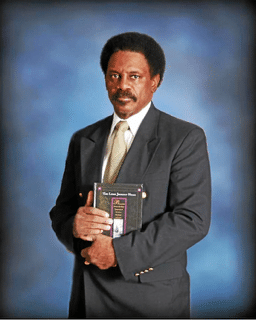
My love for history began as a teenager at Trenton Central High School under the guidance of my anthropology teacher, Dr. Jack Washington. We called him “Doc.”
He saw something in me before I fully saw it in myself. He would hand me books and invite me to stay after school, where we would sit together and talk not just about history, but about meaning. He challenged me to question, to dig deeper, and to understand that history was alive. He became my first mentor.
Dr. Washington did more than teach. He entrusted me with responsibility. He allowed me to assist in research for his books, including White Collar Factory, and I was honored to be featured in that work. He taught me how to transform historical research into dramatization. I wrote scripts based on our local history, and he coached me in performance. Together, we traveled throughout Mercer County, presenting these historical dramatizations. I was only a teenager, but those experiences formed the foundation of who I would become.
That is where my journey as a student of history and ultimately as a steward of it began.
Dr. Jack Washington is not simply someone who taught Black history in Trenton. He is Black history in Trenton.
His work documented stories that would have otherwise been lost. He preserved narratives that systems and institutions had long ignored. Because of his scholarship, generations of Trenton residents have been able to see themselves reflected in the historical record of their own city.
Yet, like so many truth-tellers, his contributions were often undervalued and underappreciated in his own time.
This is a pattern we must be honest about. Those who commit themselves to uncovering and preserving truth—especially truth that challenges comfortable narratives—are frequently pushed aside. Their work is minimized. Their voices are dismissed. Their value is not fully recognized until much later, if at all.
But their impact does not disappear. It lives on in their students. It lives on in their writings. It lives on in the communities they helped awaken.
As an urban planner, community advocate, and lifelong student of history, I recognize that my work today is directly connected to what Dr. Washington instilled in me decades ago. He taught me that history is not passive. It is active. It is a responsibility.
Black History Month is not only about remembering the nationally recognized figures whose names fill textbooks. It is also about honoring the local historians, teachers, and scholars who preserved the truth rooted in our own neighborhoods.
Dr. Jack Washington was one of those people.
His work ensured that Trenton would not forget itself.
For that, and for the countless lives he shaped, including my own, I honor him.
His legacy continues.