NJ higher education financial challenges the focus of state budget hearing
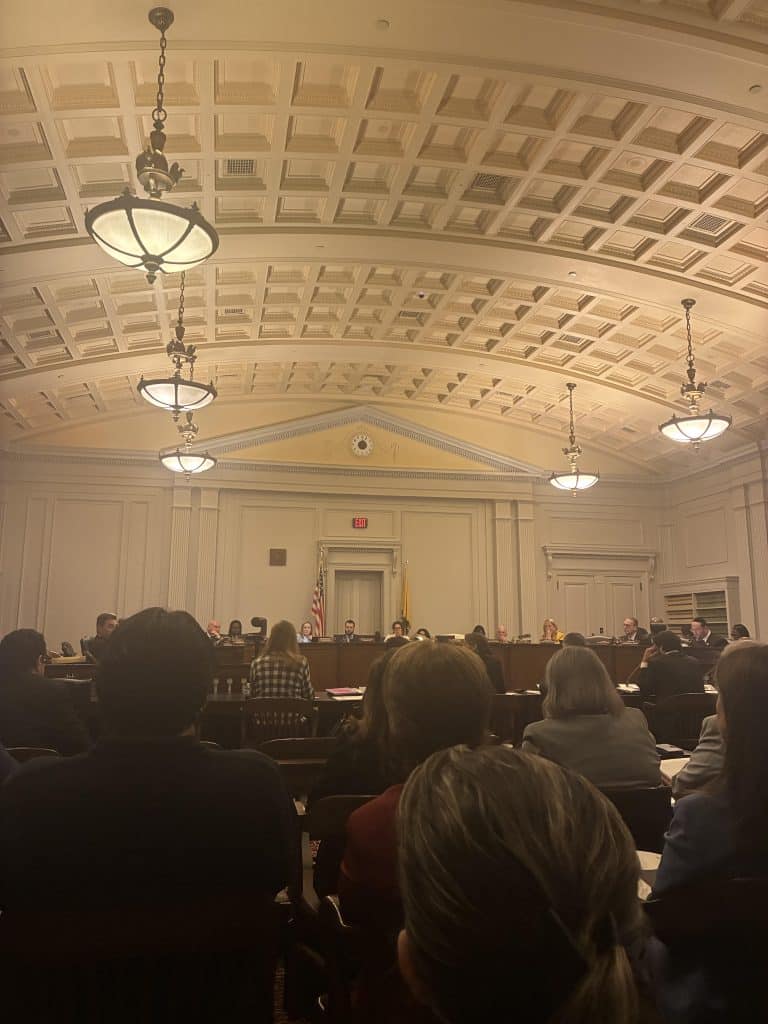
University presidents from across New Jersey raised serious concerns about higher education funding in the state’s proposed budget on Monday in a hearing before the Assembly Budget Committee.
Jerry Traino, acting executive director of Higher Education Student Assistance Authority, emphasized his organization’s mission to keep college affordable.
“HEESAA will continue to work diligently to ensure every New Jersey resident receives information and resources they need to a college degree right here at the Garden State,” Traino said.
Gov. Mikie Sherrill’s record $60.7 billion budget allocates $2.2 billion toward higher education, yet reduces aid to public-four year universities — a choice that seeks to narrow the state’s budget deficit. She has proposed reducing institutional support for New Jersey’s four-year public universities by $94 million.
Montclair State University President Jonathan Koppell is also the vice chair of the New Jersey Presidents’ Council, which represents the state’s public, private, and community colleges and universities, and he emphasizes the struggles students may face.
“College remains the pathway of choice for those who are trying to change the circumstances of their families, and of their communities,” said Koppell. “We [Montclair State University] are not the lowest-priced university in the state, and I bring that up because our students are struggling to pay tuition, and they are entitled to be skeptical, or at least ask, is their investment well made?”
Mildred Mihlon is the president of Felician University, located in Rutherford. She shared her experience running a private university whose students mainly come from lower to middle-class families and the debt many graduates face.
“Felician serves nearly 2,700 students who reflect the state’s demographic and economic diversity,” Mihlon said. “Most students of ours come from lower to middle-class areas… Fewer than half of Felician students borrow federal student loans. Immediate undergraduate debt is about $25,000, and the loan default rate is well below the national average.”
Mihlon raised concerns with the current grant levels, specifically summer tuition aid grants, which currently sit at 50%. She wants them to be increased to 75%
“This program was one of the major accomplishments over the past year… helping our students to stay on track and graduate on time. Every dollar that the state provides is likely one less dollar that a student may have to borrow, and allows students to finish their degrees sooner,” said Mihlon. “Yet, the program support has weakened with grants now reduced to 50%.”
She also commented on the reduction of formula-based operating aid for the Independent College and Universities of New Jersey — a network of 13-14 independent, non-profit, four-year institutions focused on advocacy, scholarships, and partnership with the business community.
“ICUNJ institutions educate a significant share of New Jersey students. We deliver measurable public returns and serve those with the greatest financial need, all with a limited state investment,” Mihlon said. “The fiscal 2027 budget decisions before you will directly determine whether these students can continue to access affordable and quality education to prepare for the careers New Jersey urgently needs.”
United States colleges, and some New Jersey institutions, are facing a severe financial crisis, driven by enrollment declines and rising operational costs. New Jersey City University announced its merger with Kean University to become Kean-Jersey City, which is expected to be finalized by July 1.
In Lawrenceville, Rider University is undergoing a major restructuring to avoid closure due to severe financial distress, including laying off 30 faculty members in December and cutting employee pay.
This article was written by Katie Thorn and Sarah Shockey, courtesy of the NJ State House News Service