New Jersey moves closer to driverless car testing
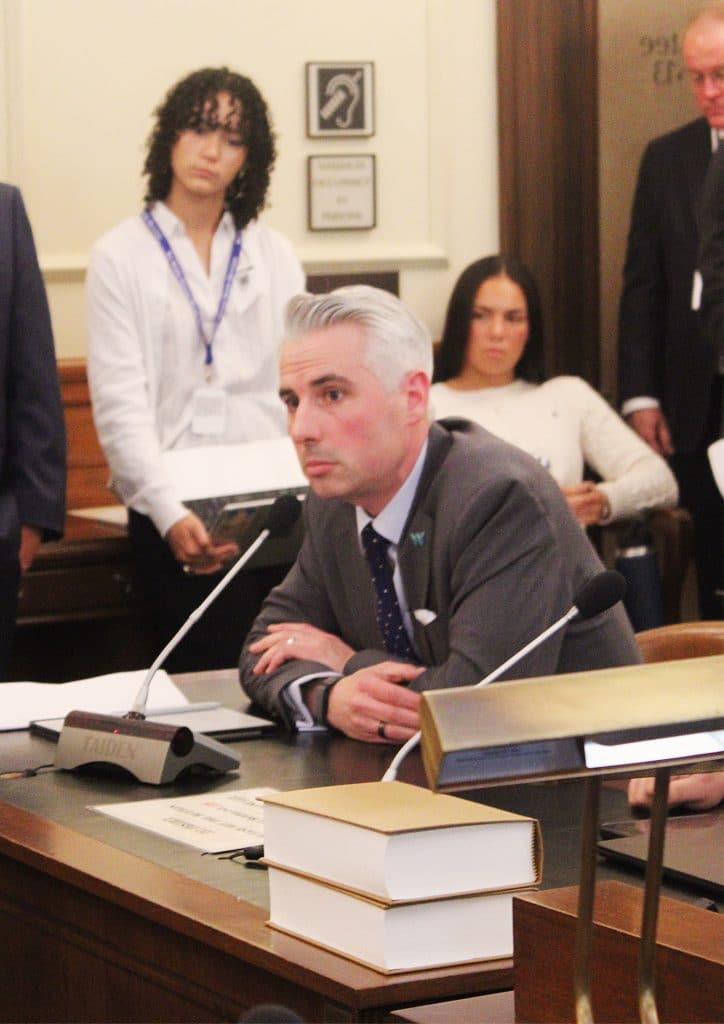
A plan to test driverless cars in New Jersey received another green light Monday, after the measure unanimously passed the Assembly Science, Innovation and Technology Committee.
The bill, A3968, will introduce a pilot program in New Jersey to allow autonomous vehicle (AV) tests at secure, non-public locations with the intention to later introduce the driverless cars to public roads following a three-year trial period.
Eight people testified in favor of the bill, but many supporters expressed concerns about technical requirements and state oversight.
The regional representative from the international self-driving car company Waymo, Matthew Walsh, testified that the company’s mission is “to be the world’s most-trusted driver,” and that Waymo’s “safety record demonstrates the lifesaving potential of our technology.”
Walsh testified that Waymo causes 92% fewer injury-causing crashes, prompting multiple questions from lawmakers.
Walsh’s promotion of the benefits of AV’s safety and statistics in comparison to human drivers was met with urging for heavy regulation from Shua Sanchez, National Campaign Director of the advocacy group Safe Autonomous Vehicles Everywhere United States (SAVE-US). He echoed the concerns of licensing, testing-area restrictions, and crash reporting, though the way AVs sense obstacles was the factor he believed required the heaviest regulation.
Sanchez said using a mix of cameras, radar, and lidar laser-light sensors is most effective at crash prevention, instead of solely camera-based obstacle detection systems.
The crashes that occur with improper object detection turn into many “tiny crashes,” according to Sanchez, and “if they’re doing lots of tiny crashes, eventually they’re going to hit a person, right?” Despite these concerns, Sanchez was in favor of the bill after the committee affirmed that his safety regulations would be considered for amendments.
Bill opponent Orlando Riley, New Jersey chair of the Automated Transit Union, expressed concerns over licensing for the testers of these pilot vehicles, asking for clarification for both in-vehicle and remote operators on “appropriate driver’s licenses,” and also the “relevant medical testing and drug testing requirements.”
Those drivers, he said, “should also be pilot program participants, rather than independent contractors, to test drive, maintain, remote assist, and remote operate their vehicles” in order to offset the jobs lost from AVs through this creation of new ones. Riley stressed the need for detailed safety disclosures on all vehicles and appropriate local taxation and place restrictions on autonomous vehicles.
The committee moved the bill on a 4-0 vote, with Assemblymen Gregory McGuckin, a Republican from Toms River, and Christopher DePhilips, a Democrat from Wyckoff, abstaining. DePhilips cited his desire for more AV crash data. Assemblywoman Carmen Theresa Morales, a Democrat from Belleville, did not vote.
An identical bill was unanimously passed by a Senate Committee last month and has been referred to the Senate Budget and Appropriations Committee.
This article was written and reported by Devon Williams and Lucy Harper, courtesy of the NJ State House News Service