Andre Williams is rebuilding Trenton one block at a time

Andre Williams isn’t just “buying back the block” — he’s revitalizing Trenton’s real estate market one house and one opportunity at a time.
Williams, 52, is a lifelong resident of Trenton who has spent the last two decades investing in the city’s neighborhoods.
An entrepreneur, philanthropist and author, his efforts in the community come at a moment of significant change in the city’s real estate market.
Trenton Mayor Reed Gusciora said that, according to MLS data, median home prices have increased 260 percent since 2018 — far outpacing both Mercer County and the State of New Jersey.
“We have a lot of investors that want to come to Trenton both from redevelopment but also to singular housing,” Gusciora said.
Williams is the owner and operator of Bass Contracting LLC, a construction company that purchases and renovates abandoned residential and commercial properties across the city.
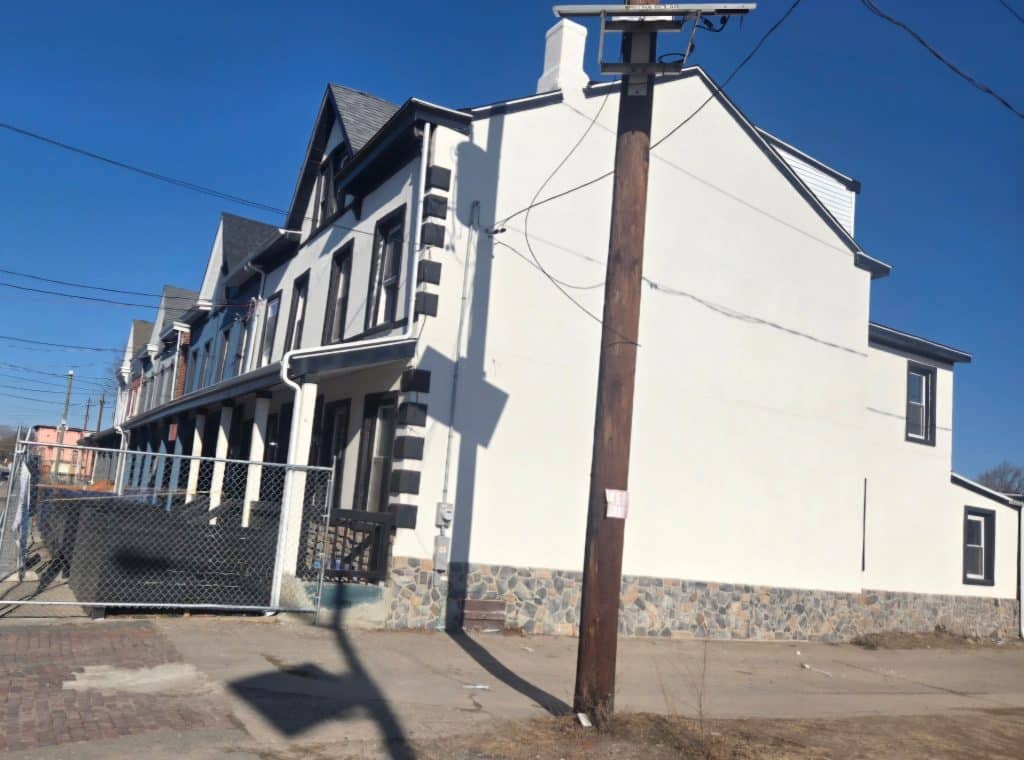
Currently, his team is redeveloping 10 row houses along Chambers Street — properties that once housed families he knew growing up.
“I knew all 10 families that lived in those homes,” he said. “For me it was not just a business move, but it was sentimental as well, to restore my whole neighborhood.”
His goal is to complete the homes and make them available for purchase by summer 2026.
“Right now they are putting on the finishing touches,” Gusciora said. “We’re really excited about the transformation of abandoned properties into sustainable living.”
Gusciora said the efforts of Williams and others align with the city’s push to return abandoned properties to productive use.
“Last year, our city council approved 176 property transfers from an inventory of about 1,000 abandoned properties that are entrusted to the City of Trenton,” he said, many of which were marketed to first-time buyers.
For residents like Elcy Cadiz, that opportunity has already become a reality.
“I came from a two-bedroom apartment, and I’m a single mom of four. I work two jobs, so I was excited to even qualify for the loans they were accepting,” she said.
Cadiz, 34, said the process of becoming a homeowner was especially meaningful and that once she qualified for the loan, Williams worked with her to secure one of the first finished homes on the block, where she has now been living for several months.
“I couldn’t be more grateful,” Cadiz said. “It’s really hard, buying a house, in general, especially if it’s not two partners or a couple.”
She said that when she saw the work Williams was doing to renovate these houses, she immediately recognized the long-term value of the property.
“I thought it was a great investment,” she said, adding how the changes in the neighborhood make it even more appealing. “So I did see the home before I purchased, and I thought it was a great investment, you know, as far as being able to live there and invest in the property.”
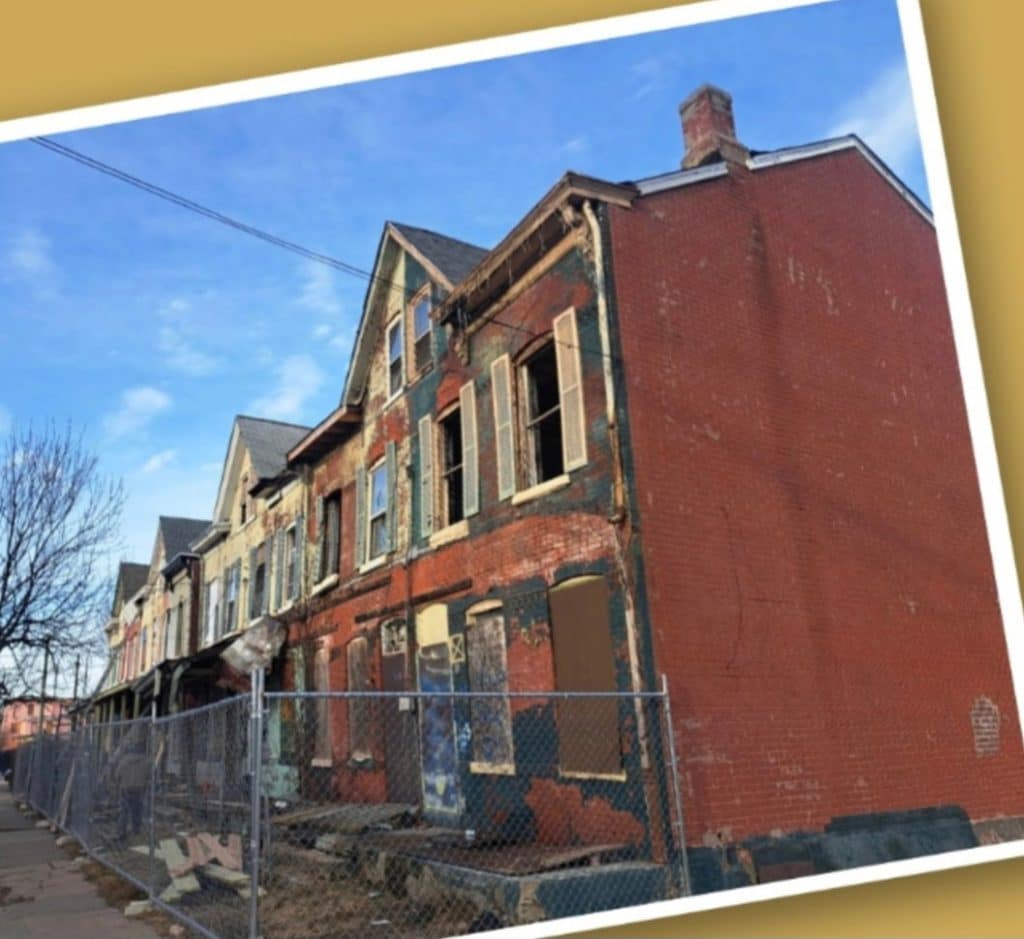
Home renovations along Chambers Street have already started to take shape.
Williams’ work also includes direct outreach through his nonprofit, One Heaven Inc., which hosts free seminars on financial literacy, credit, and access to state and federal assistance programs.
“One of the programs gets residents up to $22,000 towards their down payment and closing costs,” he said. “Their rents were about $2,500 a month. Now that they’re becoming homeowners, their mortgages are affordable — like $1,300 a month.”
Gusciora said that Williams’ efforts also align with the city’s housing and economic goals.
“There’s a lot more pride in ownership and investment in the neighborhood,” Gusciora said. “We’ve seen real progress in the city—so, it’s a win on all fronts.”
Williams also operates several businesses, including Noah’s Ark Daycare, which provides educational services for new parents and young children.
He is also investing in workforce development, with plans to launch the Fresh Start Training Academy, a trade school offering alternatives to traditional college pathways. The school will offer training in construction and healthcare-related fields, serving as an incubator to connect graduates directly with jobs.
“We’ll be looking to hire our best students under our construction company,” he said.
Gusciora also pointed to similar redevelopment efforts across the city, from major sites to individual homes.
“We have a lot of interest in revitalization,” the mayor said, citing projects downtown ranging from large buildings to single-family homes. “The real estate market is pretty hot right now, and there is a lot of interest in people purchasing and moving into Trenton.”
The recent surge in Trenton’s real estate market, however, is not without its challenges.
The City of Trenton currently has a higher vacancy rate compared to the state average — approximately 1 in 5 units — according to figures provided by the Regional Plan Association, an independent nonprofit civic organization.
More than half of all units in Trenton are renter-occupied. Of these, approximately 59.1 percent are considered rent-burdened, meaning the cost of rent exceeds 30 percent of their gross income.
Roland Pott, a licensed real estate broker in Trenton, said that affordability is a key factor for renters and homeowners.
“The rent is oftentimes comparable to what the mortgage payment would be,” he said. “It’s a really attractive place for people to get started, buy their first home, and build equity for their families.”
Pott said that although Trenton has become an attractive market for real estate, limited inventory and the soaring costs of property taxes remain a hurdle.
“There are a limited number of move-in ready homes on the market,” Pott explained.
He also said property taxes in Trenton are among the highest in the state of New Jersey, at roughly 3.7 percent.
This higher tax burden not only creates challenges for potential homeowners but also for developers.
“To invest in a property and pay that kind of tax burden makes it hard to get a return on investment,” he said.
The recent surge of interest in Trenton’s real estate market, Gusciora said, has city hall backed up with nearly 400 permit applications, slowing the pace of approval to a crawl.
Williams, meanwhile, suggested the need for a shift in mindset within the community.
“It’s a reprogramming,” he said, explaining that in neighborhoods where homes stood abandoned for decades, rebuilding confidence takes time.
“Some of these properties have been abandoned for 20-something years,” he said. “That’s a whole generation that grew up seeing nothing but abandoned properties.”
Even so, as homes are rebuilt, visible change is beginning to reshape perception, particularly among younger residents.
“They’re literally witnessing a transformation right in front of their eyes,” Williams said.
He said his work is both strategic and deeply personal, rooted in a lifelong connection to the city and a belief in its potential.
“Every day I wake up, I feel like I am playing Monopoly,” he said, “just with real money and real property and real people.”
As Trenton continues to see rising investment and renewed interest, the intersection of city-led initiatives and local developers like Williams is helping define that transformation — one property and one homeowner at a time