The Price of Equity: This Trenton couple may have the solution to the housing crisis
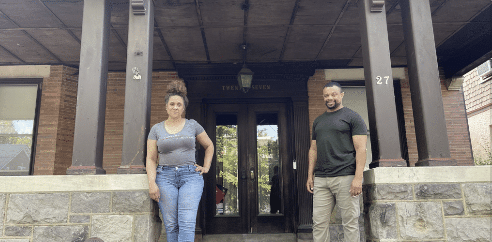
April De Simone, a Bronx native and founder of Practice of Democracy and The People’s Studio Practicum, along with her husband Marcus, are challenging traditional homeownership models in Trenton, NJ. Frustrated by the growing inequality in achieving the “American Dream,” they are pioneering new approaches to equitable housing.
Marcus, who works for the United States government, and De Simone, a trained architect focused on spatial equity, have channeled their recent experiences to advocate values and ideals rooted in democracy. The couple are in the process of setting up a hybrid perpetual trust and social impact real estate investment trust (SI/REIT) for their seven-bedroom Queen Anne Victorian Tudor home on Perdicaris Place where they would give up to 75 % of equity to the perpetual trust to ensure affordability in perpetuity for future buyers. As a “stay in place” strategy, the couple hopes to inspire a new market of conscious consumers to practice shared equity ownership and demonstrate new ways of community wealth building.
“My argument is when outside investment comes into historically disinvested neighborhoods with strong infrastructure assets, like transit and transportation [urban cities] it always ends up appreciating. So why do we always look at the negative when it comes to investing in neighborhoods where those who have been on the frontlines of disinvestment know the value and are willing to be part of the solution? Appraisals and financing instruments always downplay the neighborhood’s value, until someone else comes in with the resources,” De Simone said, sitting in her living room, where she has held several intimate community conversations based on equitable housing that have been attended by city council members, educators, students, and community activists. The living room gatherings began on April 30, 2023, the last day of Fair Housing Month, which commemorates the passage of the Fair Housing Act of 1968.
This past spring students from Princeton University’s newly designed, “Just Housing” class, which explored racial capitalism and the right to the city from the perspective of the housing crisis in the US, held a video presentation of a semester-long collaboration between Practice of Democracy and Princeton’s Program for Community Engaged Scholarship. Jacob Geuder, Anthropology Lecturer for Princeton University who co-designed the “Just Housing” class with De Simone says her contribution to the class was crucial for students to get an up close and personal opportunity to learn solutions to the national housing crisis.
“Students were moved by working with April. The collaborative project offered an integrated learning experience that developed a historical, analytical, architectural, affective and not least social understanding of the housing crisis,” Geuder said. “After establishing a solid foundation of critical conceptions of housing and the urban, students were exposed to real life experiences. In often intimate interviews with community members from Trenton, students encountered the often-personal histories interwoven into urban fabrics. Many of the students described the course as having a deep impact on how they view the question of housing and its centrality to overcome deep racial and social inequalities inscribed in American cities.”
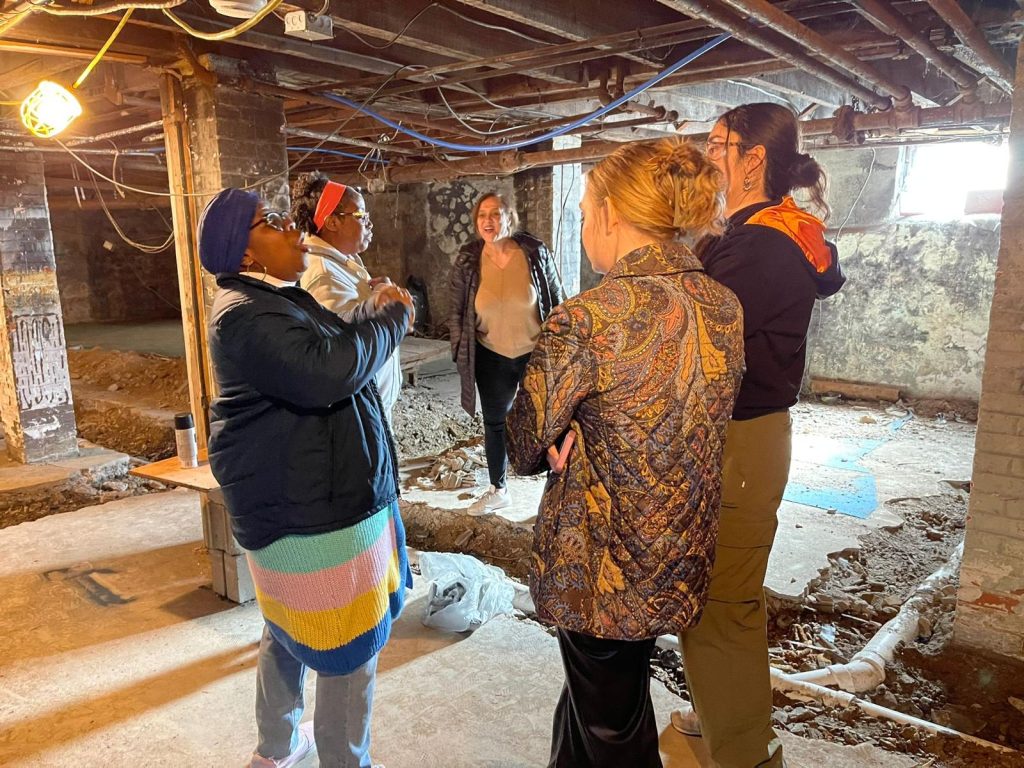
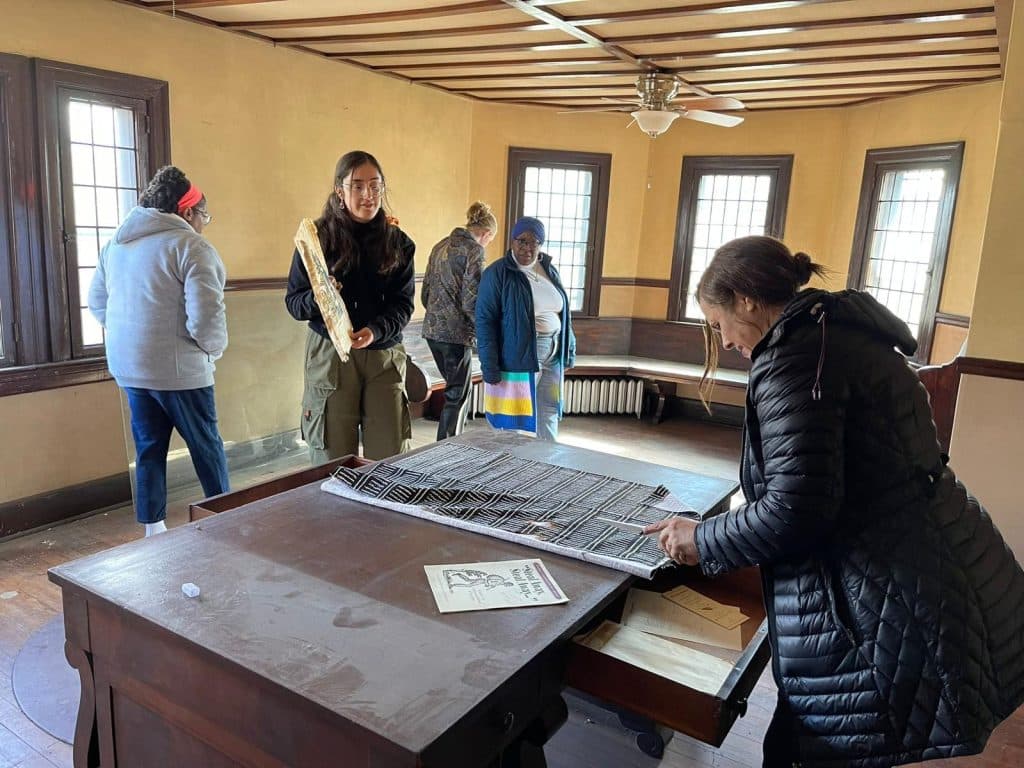
This old house
The couple’s movement for shared equity in home ownership is personal. April and Marcus both grew up in New York City neighborhoods deeply impacted by Redlining and the war on drugs. Unable to afford to live in New York City, they embarked on a search for homes in Trenton. De Simone had done community organizing work in Trenton, and Marcus had family in the area. When Marcus returned home from his deployment they began their quest for homeownership.
De Simone and Marcus received a pre-approval of approximately $800,000 based on their family’s income and credit, but despite their pre-approval that would have allowed the couple to purchase and rehab the Perdicaris home, their borrowing amount was significantly reduced by 50%, making it impossible to properly restore the dilapidated home built in the early 1900’s that was in dire need of repair. “This made me so angry because it is the same old story about investing in our affordable neighborhoods because it is based on someone else’s opinion of value which is rooted in deep histories of discriminatory valuation practices,” De Simone said.
Marcus says that he was initially taken aback when his wife presented the idea of putting their newly purchased home into a trust, because he was taught “the [traditional] housing model has always been the quickest way for people to obtain generational wealth.” But after careful consideration, he warmed up to his wife’s idea. “What am I doing?” he asked. “Am I going to be part of the system or am I going to try and buck the system and make it better for someone else, because at the end of the day I can’t take the house with me.”
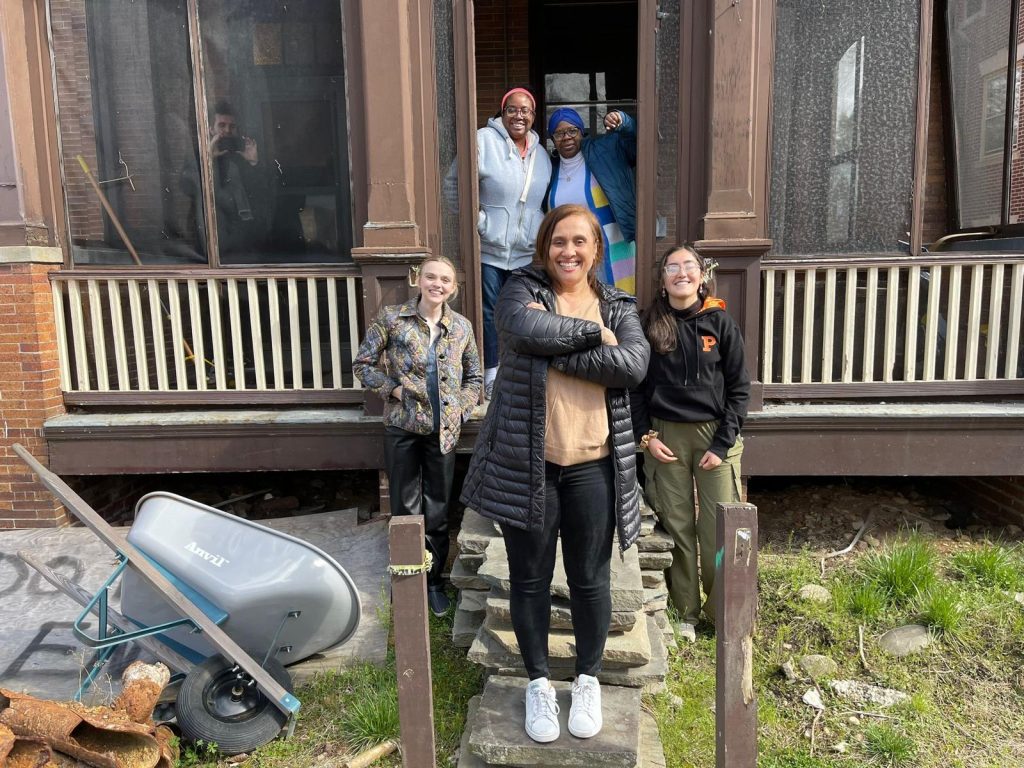
The Land Trust Movement
The couple’s fight for housing justice made a turning point after the unexpected passing of Mr. Jones, the previous owner of the couple’s Perdicaris Place property. Mr. Jones was a longstanding member in his neighborhood who volunteered his time and opened his home to a number of causes to benefit the community, such as the “Cufflinks Not Cuff”s program. De Simone reveals that Mr. Jones was a staunch supporter of the couple buying his home because he believed in their vision of fair housing and previous community centric work. After experiencing numerous delays in closing the property, De Simone said she was ready to give up buying the home. “In what we call ‘Rosa Parks’,’ moment came when we were about to walk away and asked to meet with Mr. Jones for dinner to talk about the experience. Mr. Jones kept telling us to have faith and if it takes 10 closings, we will make it happen. He was the neighborhood ‘uncle’ to us, a real old-school value person. We told him we just couldn’t do it without the right restoration funds. He died the next day. This hurt us tremendously,” De Simone revealed. The couple said Mr. Jones’ passing and the subsequent purchase of the Perdicaris Place property put them on a mission to repair some of the injustices in the housing system.
Making a change in the system, Marcus and De Simone realized it meant putting their money where their mouth is by using their Trenton home as the first property to be placed into a restrictive real estate trust to help ensure working class people wouldn’t be priced out of the neighborhood when the home’s equity goes up in value. “We are all suffering from the same thing, but we have to come out and work together to say, ‘Here’s an option’. Freedom ain’t free! People don’t want to give up equity in their assets, we do! This is not a program that is going to work for everybody,” De Simone admitted.
The couple plans to purchase other properties and land (both residential and commercial) once they raise the funds to fully renovate the home, which include significant plumbing and structural repairs. An advisory board has been formed to operate both the trust and social impact REIT. Marcus and De Simone hope this will help some homes in Trenton to be taken off of the speculative market, because resale prices for homes that are put into trusts are lower than the property’s market value, due to the employment of limited or shared equity ownership models which are designed to give a buyer fair and affordable access in perpetuity. Properties involved in their trust model will have certain restrictions, such as not being able to sell the outside of the trust.
Land Trusts as a Tool
A land trust is a strategic tool used to manage and preserve land for community benefit and equitable development. In essence, a land trust is a non-profit organization that acquires and holds land on behalf of the community, often to prevent it from being sold or developed in ways that could drive up costs or displace residents. By separating ownership of the land from the ownership of the buildings on it, land trusts can offer affordable housing options and maintain long-term affordability.
De Simone and Marcus are leveraging this model to address multiple housing challenges in Trenton. Their initiative involves creating a land trust that will enable them to acquire and manage properties in a way that keeps them affordable for future generations. By controlling the land and allowing residents to own equity shares without the burden of escalating land costs, they aim to foster an inclusive and stable community, countering the trends of gentrification and displacement that often accompany urban development. This innovative approach not only makes local assets more accessible but also ensures that the benefits of property ownership are shared more equitably among Trenton’s residents and entrepreneurs.
Equity and inclusion are the founding principles of the land trust movement De Simone and Marcus are creating in Trenton, and it can be duplicated anywhere. The Essex Community Land Trust (ECLT) is currently the only active affordable housing community land trust in the state of New Jersey. ECLT has permanent affordable units in Montclair and Bloomfield, New Jersey and has provided homeownership opportunities for many Essex County families.
The ECLT was created in 2011 by Britnee Timberlake and ECLT President Harold Simon, who is the former publisher of Shelterforce, a nonprofit news organization centered around the fight for healthy communities. Timberlake is a longtime community activist and nonprofit leader who has represented the 34th Legislative District in the New Jersey Senate since January 2024, when she became New Jersey’s youngest state senator.
“Historically there have been communities strategically carved out of that wealth-building opportunity through things such as Redlining and discrimination for mortgages or very expensive homeowners’ insurance,” said Timberlake. “What I love about the land trust is that we focus on creating generational wealth while also preserving the affordability of units in the community.”
The first land trust in the United States is considered to be New Communities, Inc, which was formed in 1969 by Robert Swann and Slater King, a cousin of Dr. Martin Luther King, Jr. to support Black farmers who lost their homes and land during the Civil Rights era. Five decades later, the number of CLTs in the United States has grown to more than 225, according to the Grounded Solutions Network, a nonprofit network that promotes affordable housing solutions.
According to the Housing and Urban Development department, equity programs, such as the one De Simone and Marcus are forming in Trenton vary in structure and are distinguished by a common emphasis on owner occupancy, long-term or perpetual affordability, and equity sharing. These defining features enable shared equity models to facilitate broader access to affordable homeownership for low-income families. This shared equity model can also aid local governments grappling with vacant and abandoned housing by offering an opportunity to transform those properties into permanently affordable housing.
In Trenton, ownership of rental housing in the capital city is dominated in some markets by institutional investors. Since 2017, 44% of home sales in the city have gone to LLCs, which own 22% of the housing stock as of 2021, according to the 2023 Trenton Housing Profile. Some long-time residents have expressed their frustrations in purchasing affordable properties in the city, particularly when it comes to public auctions designed for Trentonians to become homeowners. One commenter on a Facebook post cited, “Trenton ain’t cheap anymore. When it was cheap, we didn’t buy. Now someone is buying and we’re complaining.”
Moving out of Trenton
Community activist and native Trentonian, Jonette Smart, becomes animated when she speaks about growing up in Trenton and raising a family in the capital city. Smart says her mother was one of the first single Black women to own a home in the city after a white woman cosigned a loan for her mother to purchase a house on Hanover Street.
Smart is a model for what a proud Trentonian looks like serving on various committees and touting all things Trenton, but lately Smart and her husband have been contemplating selling their Trenton home and moving south. Simply put, the math is not ‘mathing’ for this fixed-income retiree, who says her social security checks and pension doesn’t keep pace with the cost of living. “Not only taxes, but [other] fees are going up. All of these things increase, yet your income remains the same and something has to give.” Smart says that she and her husband receive offers in the mail every week from investors interested in buying their home. “Each week the offer increases,” she said, adding, “I realize it’s about gentrification.”
At 65, Smart says she forgets she is considered a senior citizen but realizes she’s not the only one managing a budget on a fixed income. “Seniors work so hard for what America says is equity and something that you can leave to your children.” If Smart and her husband decide to sell their home and move out of Trenton, Smart’s Trenton story may end with her because her kids have expressed they aren’t interested in taking over the family home. This is one example of how the social fabric of a community changes over time, stories become forgotten, and cultures erased.
Preserving History
In addition to forming a real estate trust, it was recently announced that De Simone’s firm, Practice for Democracy, will work with John S. Watson Institute for Urban Policy and Research and The Michael Graves School of Public Architecture at Kean University to develop and advise local governments and public agencies on ways to improve the economic health, environmental resilience and quality of life in their communities. With experience in similar revitalization planning projects in New Jersey and neighboring states, Practice of Democracy will support a multi-partnership collective with ongoing research and design engagement fostering sustainable and equitable neighborhood revitalization in the Greater Coalport area.
A one-time thriving manufacturing center in Trenton’s North Ward, the Coalport neighborhood became distressed after factors such as Redlining and the 1955 Coalport Revitalization Plan drove investment away from the area, leaving behind abandoned buildings and an underserved community. Along with addressing housing and economic opportunities for residents, the Coalport project aims to increase access to improved public spaces and build connections to adjacent communities for additional opportunities. De Simone
“The Coalport Revitalization Planning Project is an investment shaped by the vision of those who live in the historic Trenton neighborhood. This project prioritizes community input, historical context and social equity, and I am proud to support it,” said U.S. Congresswoman Bonnie Watson Coleman, whose district includes Trenton. “As the only appropriator from the New Jersey congressional delegation, I want to make sure that New Jerseyans’ tax dollars come right back to make a difference in our communities.”
The Coalport Neighborhood Revitalization Planning Project, funded by a two-year $750,000 federal grant, is led by Kean’s John S. Watson Institute for Urban Policy and Research and the University’s Michael Graves College School of Public Architecture. De Simone says her work on the Coalport Neighborhood Revitalization aligns with the work she is already doing in the community, because it involves the element of contextualization, storytelling, and narrative shifts.
“[Coalport] was a historic Black community. No one knows its history. No one knows the intricacies [and] the ecology of what was there and what was wiped out. How do you restitch a neighborhood fabric when its pedagogy and knowledge is just not present? We need to harness the stories of residents like the late James Sonny Vereen, and others who lived in that neighborhood. Whether it is the Coalport or the Perdicaris project, each offers an opportunity to contextualize the “why” of tools like land trust and intentional investments to advance just and inclusive neighborhood developments. ”
For more information on this Land Project visit peoples-studio.org.
Author