Planting Change: How the Outdoor Equity Alliance is Greening Trenton, One Tree at a Time
Trenton, New Jersey, is a city known for its vibrant culture, but also a city deprived of accessible green spaces. The Outdoor Equity Alliance (OEA), based in Trenton, is changing that and gradually making the city greener and more sustainable, little by little. After becoming an independent nonprofit in September 2023, OEA launched into action with one mission at its core: to ensure all communities have fair access to nature while empowering a diverse new generation of environmental leaders.
There are three main ways the organization works to make a transformative difference. Their “Big Ideas” are taking a stand on environmental injustice by opening pathways to green careers, revitalizing urban spaces, and supporting community-led conservation. Each effort is a step toward reconceptualizing Trenton as a place where nature is for everyone and where taking care of the environment reflects the city’s diversity.
Their programs are driven by their staff and partners, and collaborations include Mercer County Community College, Trio Upward Bound, and Trenton Artworks. OEA works under the Regional Greenhouse Gas Initiative, alongside partners such as the New Jersey Conservation Foundation and the New Jersey Tree Foundation, among others.
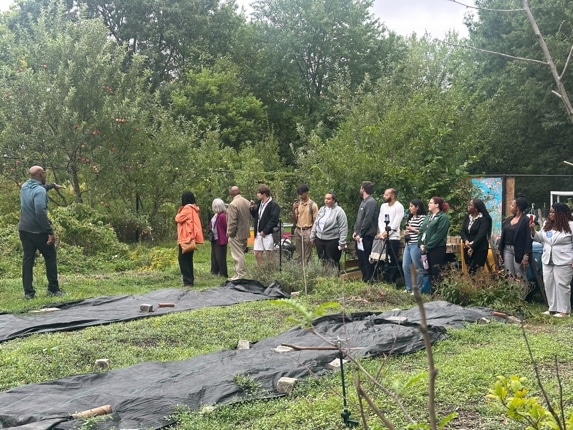
OEA is primarily grant-funded from major donors and foundations. To date, they have added micro meadows and pollinator meadows throughout the city of Trenton. Their impact was acknowledged last year when they received a million-dollar grant from the Princeton Area Community Foundation Bunbury Fund.

Transforming Trenton
OEA is teaming up with schools, colleges, and local groups to directly bring outdoor education, career opportunities, and conservation projects to the people. William Wilson, President of OEA, is hopeful that their work will transform the city of Trenton. “We can get to a point where we are expanding the urban canopy and expanding conservation throughout the city with people who lived and grew up in Trenton who never knew that there were such jobs,” said Wilson.
He feels there is more destruction of the environment rather than care. Wilson says, “If we don’t do harder work and get more people fighting for it…we’re going to take major steps back.”
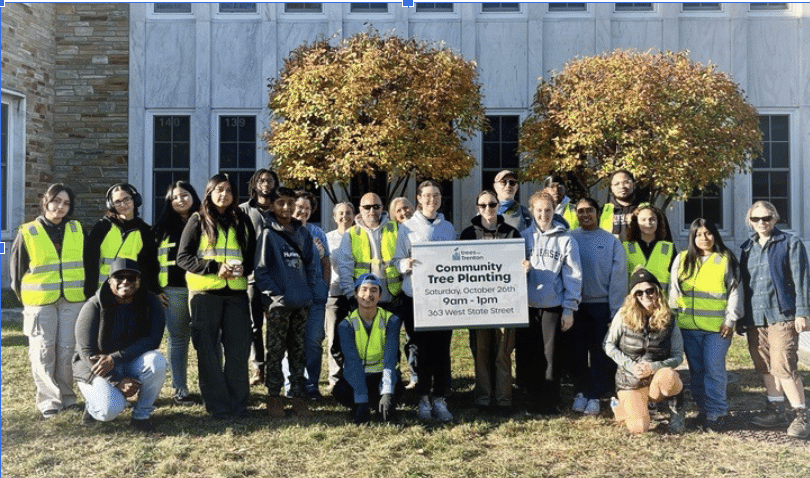
That’s why OEA created programs like the Tree Ambassador Program. Under the program, every fall, they select a group of high school students to participate in an eight-week experience designed to introduce them to a variety of environmental careers, an initiative they call Careers in Conservation. In the spring, a smaller group from that cohort continues with focused training in urban forestry.
Students from the program spend weekends canvassing neighborhoods, knocking on doors, hosting info sessions, and visiting schools and job fairs to raise awareness about the value of street trees and their impact on things like air quality. Looking ahead to the summer, OEA hopes to launch a Community Forest Corps, a team of students who will help care for and water newly planted trees around Trenton, since the city doesn’t have the capacity to keep up with it.
One student who embodies the impact of these efforts is Jevon Lin, a Trenton Central High School student who is an example of what OEA’s programs can achieve. He is a member of Mercer County Community College Upward Bound Program and a member of the OEA’s Trenton Ambassador Program. Lin has become a passionate advocate for environmental justice and wrote and delivered an op-ed at City Hall, sharing his personal experience in the program and the importance of their work in the community.
OEA envisions a future where sustainability thrives and is a way of life. A healthier Trenton means community tree nurseries, more areas to grow fresh food, and turning overlooked, abandoned lots into urban farms. While city laws may limit traditional farming, there are still countless ways to care for the environment. These small but mighty green spaces can supply local soup kitchens and neighborhoods with fresh fruits and vegetables, bringing healthy food closer to home.
Ultimately, OEA hopes people find the way to connect with nature, however that looks for them. Whether it’s walking, gardening, swimming, or just stepping outside for a moment of peace. “Whatever it is, just try to find it,” says Wilson. “And if you don’t know how to find that, find us,” he says.
This article was written by Angie Varela