For young first-time homebuyer, Dad’s wisdom trumps affordability fears

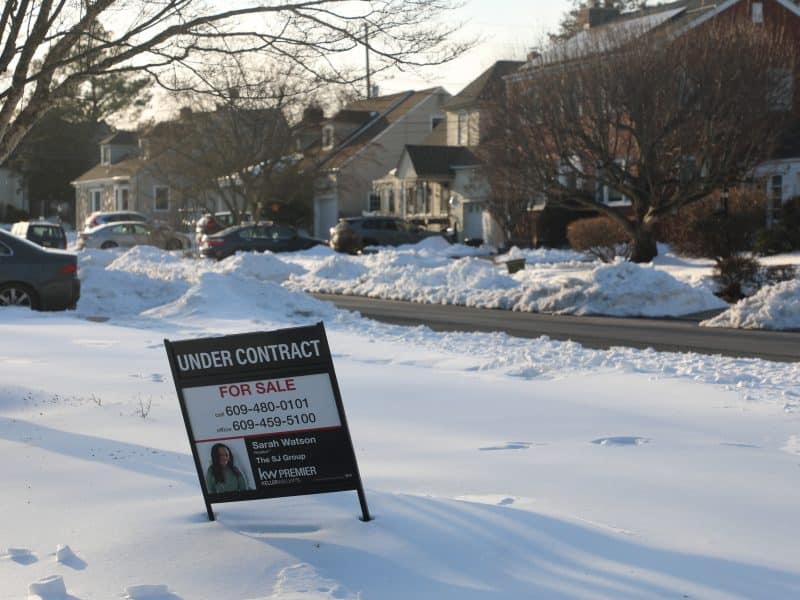
Haley Schlosser’s two-year search for a South Jersey home to buy was tough enough. New Jersey’s high cost of living made the hunt even more stressful.
A restaurant server, Schlosser, 25, has unpredictable income. Inflation is hitting customers hard, so they’re eating out less – and when they do, they’re skipping desserts or choosing free water over $4 soft drinks. But the restaurant’s patio bustles, and that means good tips. Despite the worry, she followed her Dad’s advice to own.
“It’s hard to know how much money you make – it goes up and down,” Schlosser said. “When we had the patio, that was my money-maker. And then, boom! Once I bought a house, I feel like everything changed.”
Buyers like Schlosser – who lucked out with a home in West Deptford – have reason to be cautious.
Most New Jerseyans are struggling with paying more for childcare, groceries, utilities, taxes, transportation, insurance, healthcare and other needs. The cost of living in New Jersey is 22% higher than the national average, according to the Economic Research Institute, which studies salaries and other employee compensation.
For jittery first-time buyers, add the stress of the nation’s highest property taxes, averaging a record $10,095 in 2024, according to Department of Community Affairs.
Real-estate agents say they know what goes through house hunters’ minds.
“You want your school to be good, to keep your values up. You want your town to have things going on and activities that bring people to your town,” said Kathy MacDonald, a Realtor with more than 50 years’ experience. “But people can’t afford it. The average person cannot afford to live here.”
At the same time, they say, homeownership offers a chance to make money back and potentially profit at sale time. And they’re courting Millennials like Schlosser, who in 2024 represented 38% of the buying market, according to National Association of Realtors data.
Realtor Pip Haxby-Thompson says young people should start with less-expensive locales. State grants can cover closing costs for first-time homeowners and first-generation buyers who stay for five or more years.
“As long as you’re willing to sort of stay in a home for a decent chunk of time, you’ll get your money back, and then you can access the equity within your home to eventually move into your dream location or your dream home,” Haxby-Thompson said.
That’s what he did when he moved to New Jersey with his husband, Jeremiah, and their two dogs. They started in a 600-square-foot, two-bedroom, one bathroom home in Riverside.
“We kind of got onto the property ladder, and then we were able to access the equity of that house to help us move into Haddon Township a couple of years ago,” Haxby-Thompson said. “And we actually still have that property, and we now rent it out.”
Home sales, even at the low end of the price range, are crucial to the state’s overall economic health.
“Everything that affects real estate affects all the other jobs out there,” MacDonald said. “So when the market is doing great, Home Depot, Lowe’s is doing great. The builders are doing great, the plumbers, the mechanics, the electricians.”
In June, a Rutgers Eagleton Institute of Politics poll of 621 adults found that 85% of New Jerseyans are somewhat or very unsatisfied with how state government is handling affordability and the cost of living.
“Affordability has become a defining issue in New Jersey and especially in this year’s governor’s race,” said Ashley Koning, the poll’s director. “How each candidate interprets and tackles the issue will be key to persuading and turning out voters.”
Heading to the November election, Republican nominee Jack Ciaterelli proposes affordable housing for people of little means to revitalize urban areas. On the Democratic side, Mikie Sherrill wants to improve first-time homebuyer programs.
Neither candidate has offered a firm plan to bring down the nation’s highest property taxes, averaging a record $10,095 in 2024.
Even that statistic, though, wasn’t enough to deter Schlosser, the young first-time buyer.
Her father, she said, told her never to rent, and she repeated his reasoning: “You’re going to waste your money just paying off your lease, while you could be saving that and just buy a house, and then pay the same amount.”
Do you like what you read? Join our free weekly newsletter here. This article is written by Madison Miller, courtesy of the NJ State House News Service
Madison Miller, a Spring 2025 intern for NJ State House News Service, graduated from Rowan University with a degree in journalism and a minor in entrepreneurship. She is studying for a master’s degree.