City of Trenton unveils New Jersey Black Heritage Trail Marker at Locust Hill Cemetery
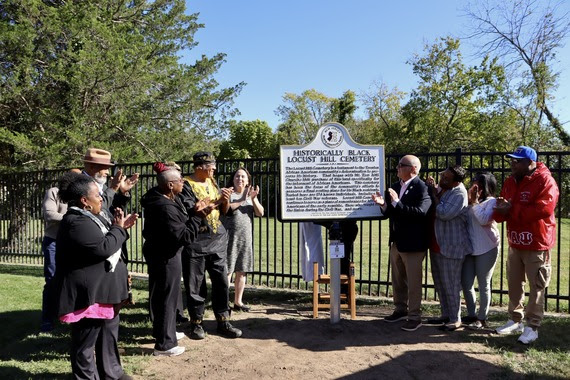
Community members gather to celebrate the unveiling of a historical marker at Locust Hill Cemetery in Trenton, honoring the historic cemetery’s significance and preserving its legacy for future generations.
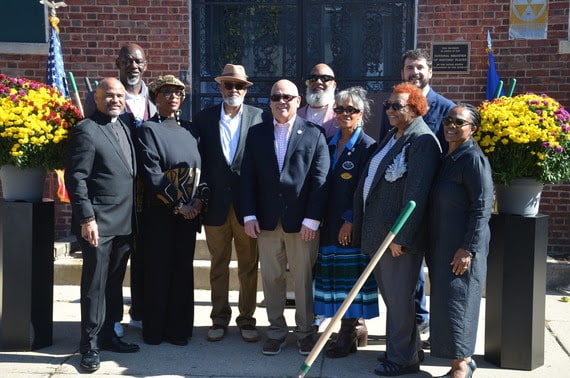
The City of Trenton and the New Jersey Historical Commission yesterday unveiled a New Jersey Black Heritage Trail marker recognizing the “Historically Black Locust Hill Cemetery” at the Locust Hill African Cemetery and Museum, 73 Hart Avenue. The ceremony formally places Locust Hill within the State’s growing network of sites that preserve and interpret Black history across New Jersey.
The marker’s final text describes Locust Hill as a testament to the Trenton African American community’s determination to preserve its history. It traces the cemetery to Mt. Zion AME Church’s 1861 purchase of land specifically for the interment of African Americans and identifies 174 known individuals buried at the site, including at least ten Civil War veterans. The marker recognizes Locust Hill as a continuing place of remembrance for African Americans of the early republic, those who fought for the Union during the Civil War, and the generations that followed.
“Locust Hill is sacred ground and an essential part of Trenton’s story,” said Mayor W. Reed Gusciora. “For generations, African Americans created institutions to care for their families, honor their dead, and preserve their community even when segregation denied them equal access elsewhere. This marker ensures that the people buried here – and the community that fought to protect this cemetery – remain visible in the history of Trenton and New Jersey. “
Locust Hill’s history is connected to Mt. Zion African Methodist Episcopal Church and to an earlier African American burial ground on Hanover Street. A City of Trenton historical survey completed in 1998 documented the community’s efforts to secure a new burial place and the 1861 land transaction that led to the Locust Hill site. In 1873, the church conveyed the cemetery property to the Locust Hill Cemetery Company of Trenton, an organization incorporated specifically to administer the cemetery. The same City survey characterized the establishment of a formal African American cemetery as one of the principal civic achievements of Trenton’s Black community in the nineteenth century.
Over time, the cemetery suffered from neglect, loss of physical features, and changes to the surrounding property. Modern preservation work returned attention to the site and to the people buried there. The late Algernon Ward, a longtime advocate for Locust Hill and a leader in the site’s preservation, nominated the cemetery for the New Jersey Black Heritage Trail. The New Jersey Historical Commission approved Locust Hill in the Trail’s inaugural 2024 round of nominations. In a July 2025 letter to the City, the State noted that stewardship of the cemetery had transferred to the City of Trenton and moved forward with the marker process.
“This recognition is part of a larger responsibility to preserve the site, tell its story accurately, and make that history accessible to future generations,” said Paul Harris, Interim Director of the Department of Recreation, Natural Resources & Culture. “
The City Council formally approved installation of the marker on December 16, 2025, through Resolution 25-464. The resolution also committed the City to maintaining the site around the marker and authorized coordination with the New Jersey Historical Commission on installation.
LOCUST HILL AND THE NEW JERSEY BLACK HERITAGE TRAIL
The New Jersey Black Heritage Trail was established by P.L. 2022, c.102, approved on September 7, 2022. State law directs the New Jersey Historical Commission to identify significant Black heritage sites and build a statewide trail that promotes awareness and appreciation of Black history, heritage, and culture. The program coordinates the design, fabrication, and installation of historical markers and supports public engagement and educational programming around the stories represented by those sites.
The New Jersey Historical Commission currently lists 77 approved Black Heritage Trail nominations statewide. Physical marker unveilings began on June 11, 2025, when the State unveiled the first Black Heritage Trail marker at the historically Black Franklin Street School in Cape May. Trenton has already hosted two Black Heritage Trail marker unveilings: “Honoring the Enslaved at William Trent House” on December 3, 2025, and “Playwright and Poet Ntozake Shange” at Ulysses S. Grant Intermediate School on June 11, 2026. The Locust Hill ceremony adds a third physical Black Heritage Trail marker in the Capital City.
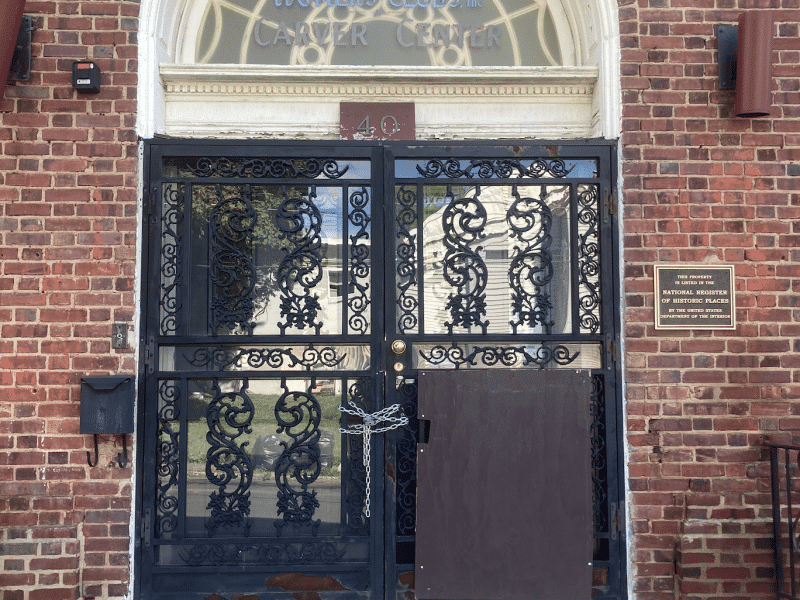
The marker unveiling also complements the City’s broader preservation work at 73 Hart Avenue. The City has advanced plans to rehabilitate the existing structure at the site as an interpretive center and museum, creating a permanent place to tell the history of the cemetery, the people interred there, and the generations of Black Trentonians who built and sustained the community.