Is it time to admit some affordable housing isn’t affordable?

Facing an affordable housing landscape defined by scarcity, fraught with lawsuits, and overshadowed by a statewide deadline to add nearly 85,000 units in 10 years, New Jersey towns are doubling down on the use of some controversial housing tools.
First up are restrictive deeds, limiting to whom and for how much affordable homeowners may sell their property. Second, is a 95/5 resale rule, which compels homeowners to pay their town’s affordable housing trust 95 percent of the profit from their home’s sale—specifically, the difference between their home’s restricted “affordable sales price” and whatever market rate price it commands.
Housing professionals insist these measures ensure long-term affordability by keeping units from being easily flipped for market rates. “If all the equity goes to the person who bought the house, that means nobody in the future will have the same opportunity to access affordable homeownership,” said Adam Gordon, executive director of Fair Share Housing Center, an affordable housing advocacy group.
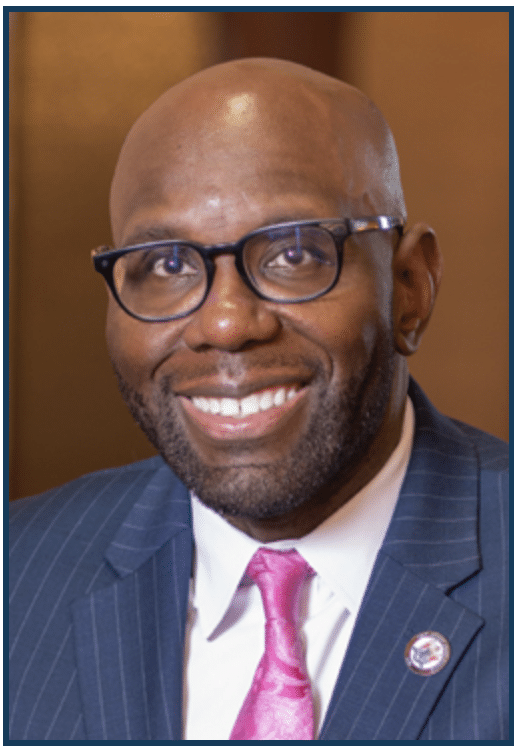
Another way to see it is that the rules stop deserving, affordable homeowners from using their home’s equity to advance their lives in the ways that owners of conventional market-rate properties do. “Restrictive deeds, including the 95/5 rule, can perpetuate economic segregation by limiting homeowners’ ability to build wealth,” said Senator Troy Singleton (D), a primary legislative sponsor of New Jersey housing Bill S50, which reforms towns’ responsibilities concerning the provision of affordable housing.
The deeds also place some of the burden of gatekeeping affordable inventory back onto the people it is supposed to help. Now under a housing law that Gov. Phil Murphy signed in March 2024, New Jersey is giving towns credit for doing so. “Which is fair right?” asked Courtney Peters-Manning mayor of Hopewell Township during a recent phone interview. In the fall, Hopewell Township asked a number of residents subject to such deed restrictions to renew them and help the town earn credits. “Because [these homeowners] paid a reduced price. It’s not fair to have a subsidized unit for 30 years and then expect to get a windfall of double what you paid after the taxpayers have subsidized that unit for 30 years. I don’t understand how anybody can think it’s unfair,” Peters-Manning said. Recent legislation broadened credits municipalities can use to reduce their affordable housing obligations, including earning full or partial credits for extending affordability controls on existing affordable housing.
A 20-minute drive from Trenton, Hopewell Township’s renewals-for-credits process makes for an interesting case study: The municipality’s November meeting drew a crowd from Brandon Farms, one of New Jersey’s first-ever “inclusionary developments” built from 1993 to 1996. Most of the crowd received township letters urging them to renew their units’ expiring deed restrictions or pay higher reassessed property taxes. Letters also stipulated that property owners would need to be “recertified income eligible to extend the [affordable housing] controls,” although officials have since insisted that recertification is unnecessary.
The request impacts 138 affordable deed-restricted units in Brandon Farms. If homeowners do not extend the restrictive deeds another 30 years, their townhomes will no longer be counted among Hopewell’s affordable housing inventory. This increases the number of new units the state requires the township to build.
“You heard earlier that we’ve got another [546] units of housing that we’re responsible for in the next 10 years,” said the Hopewell Township attorney Steven P. Goodell during the meeting. “From our position, as a township, we would like to renew as many restrictions as possible,” he said. Since the meeting, many of the affordable unit owners have expressed confusion and worry that this unforeseen consequence of choosing affordable homeownership is creating a new state of insecurity.
“I have lost trust in the township,” said one Brandon Farms owner who bought their unit in 2015 and spoke to the Trenton Journal on condition of anonymity. This owner claims that communication with township officials has been inconsistent, explaining that contrary to the township letter stating that homeowners must recertify their income, officials at the November meeting assured residents that step would not be necessary. The homeowner also cited an official’s email referencing a version of the deed that the owner claims not to have seen.
Sylvia Kelly
Homeowner Sylvia Kelly, who bought her home in 1995, takes issue with her unit still being subject to a 95/5 resale regulation, even if the mortgage is paid off. During the November township meeting, she made her point: “All these years, I paid the mortgage. I was the one who invested in taking good care of my property. Not the township. So why would the township take 95 percent of my proceeds?” The town’s response is simple: The 95/5 rule was part of the home purchase deal. Now, owners can choose to renew their restrictive deeds for another 30 years or begin paying higher reassessed property taxes.
Morgan Westfield
Morgan Westfield (not her real name), a 52-year-old surgical assistant, bought her Brandon Farms home in 2009. Single and facing the possibility of having to care for her aging mother, she is now nervously weighing the pros and cons of applying for another restrictive deed when it’s uncertain whether she’ll need to share income data to re-qualify. “Not every attorney knows about the restrictions. But I went into this believing, at least, if I paid my [mortgage] off, this is my home,” she says of her purchase 16 years ago.
But having to possibly re-qualify her income for the property tax break after more than a decade and accept that she’ll never be allowed to access all of the equity she has built up? These are consequences she did not fully grasp back at the closing table. “Yes, the value of my home will increase if I [opt out of] the deed extension. I’ll be able to sell it for more. I understand that. But I’ll only get 5 percent of the profit, and [the town] gets 95 percent?!”
Westfield rattled off a list of some of the updates she’s had to pay for over the years, including AC and heating units and her second water heater. A five percent profit wouldn’t cover even one of the home updates she has had to make since she bought the home, she said. “I’m not even talking about making the house beautiful. I’m talking about the bare necessities.”
Joanne Appello
Joanne Appello bought her home in 1994, and as she has retired, paid her mortgage, and has no desire to sell, for her “nothing is really going to change for me, except that I sign a new deed and requalify,” she said.
That doesn’t mean she likes the pressure that restrictive deeds and the 95/5 rule allow the township to apply to her neighbors. “I’m annoyed, and it doesn’t even affect me. Rhetorically, she asks, “How is it just that an owner can’t recertify their income, has to leave the affordable program, and now taxes are going to go up, condo fees are going to go up? So now you have to move. But then, on top of all that, to add insult to injury, the owner can’t get their fair share of the profit from a sale?
“People think affordable housing is cheap. But fixing a broken HVAC system costs us the same money as anybody. So does replacing windows, a water heater, and appliances. And it’s not like we even have land. It’s a glorified apartment.”
Towns in New Jersey are incentivized to take advantage of affordable housing controls, as long as they receive bonus credit from the state for every unit they can hold, regardless of the hardship that may cause families living in them. “The basic challenge is that there is inevitably a tradeoff between individual homeowners gaining equity and preserving affordability over time,” said Gordon. Still, is it at all unsettling how enthusiastically housing professionals embrace restrictive deeds to “preserve affordability,” given they were also once a preferred way to preserve homeownership exclusively for whites?
“The use of restrictive deed renewals to retain affordable housing inventory can be seen as a double-edged sword,” said Singleton who went on to say that while it helps maintain affordable housing, it can also limit financial mobility for homeowners. “It’s crucial to balance these strategies with policies that promote both affordability and economic advancement to avoid any semblance of modern-day redlining,” said Singleton.
Are there ways to add affordability to the housing market without demoralizing homebuyers? Are there ways to move the burden of restocking the affordable market away from the striving middle who still need it—employed, educated, and still priced out? What may be missing from New Jersey’s current countdown of affordable units is the realization that affordability isn’t only a destination. Sometimes it should also serve as a leg up.