Through boom, bust, and rebirth, Trenton’s real estate market continues to evolve
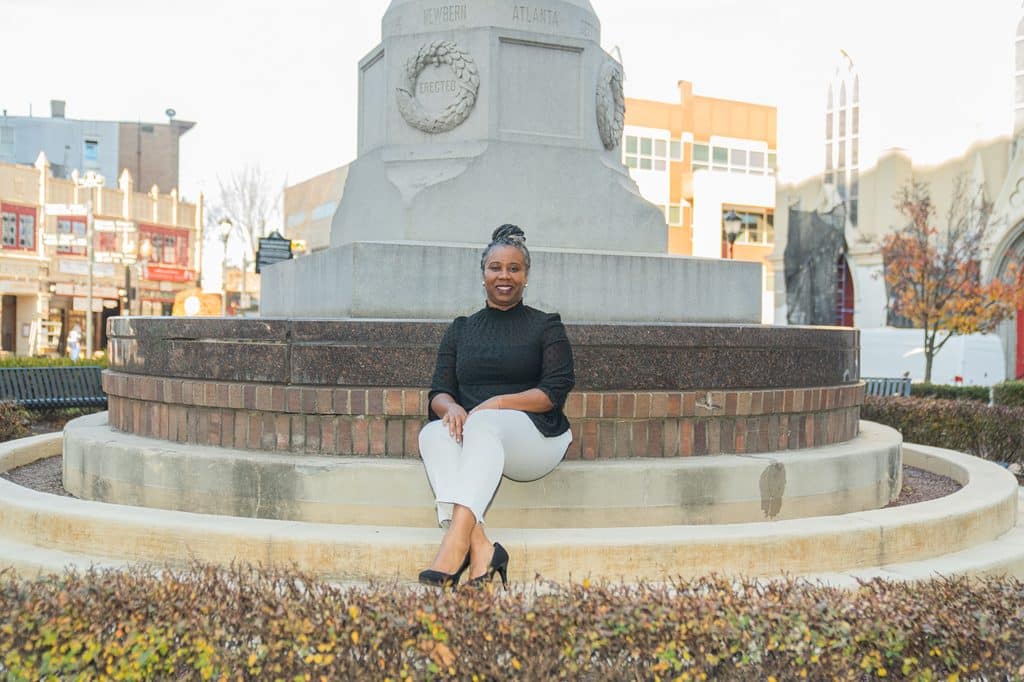
For more than 25 years, Fareeda Stokes has helped clients buy, sell and finance properties across Mercer County and other parts of New Jersey and Pennsylvania.
Born and raised in Trenton, the owner and broker of record of Harkes Realty & Associates brings an insider’s perspective to the city’s residential and commercial real estate market—and where it may be headed.
“I had the privilege of watching Trenton through every market cycle imaginable,” Stokes said. “When I started, over 25 years ago, the conversation was primarily about affordability and stability. Today, it’s about opportunity, redevelopment, investment, and changing buyer expectations.”
A changing housing market
Stokes watched Trenton weather the housing boom of the early 2000s, when easy access to credit and low mortgage rates helped drive property values up faster than many incomes. She later helped homeowners navigate the foreclosure crisis that followed the collapse of the U.S. housing market in 2008.
More than a decade later, property values in Trenton surged. Mayor Reed Gusciora told Trenton Journal in March that, based on multiple listing service data, median home prices had increased 260 percent since 2018, outpacing gains across Mercer County and New Jersey.
Housing demand rose following the COVID-19 pandemic as remote work gave many employees greater flexibility to choose where they lived. Low mortgage rates and access to public transportation helped attract buyers to the area.
Priced out of neighboring communities, some buyers sought larger homes with more indoor and outdoor space. Stokes said they found options in Mercer County at prices they had not expected.
“They wanted more living space,” she said, “and they were able to find it at price points that they thought were unimaginable.”
The area’s proximity to New York City and Philadelphia also appealed to commuters, while low mortgage rates helped make monthly payments more affordable, particularly for first-time buyers.
Redevelopment brings new opportunities
Stokes believes Trenton’s redevelopment efforts can help the city meet housing demand.
“When I think about what the future is looking like and how we’re able to keep up with the demand, I can say that I’m optimistic about the future for Trenton,” she said.
She pointed to local contractors such as Andre Williams, who has been purchasing and rehabilitating abandoned residential and commercial properties and returning them to the tax rolls.
For buyers, particularly those purchasing their first home, the sale price is only part of the affordability equation. Stokes said expanded financial assistance programs have helped reduce upfront costs and make homeownership more attainable.
“When I got into the industry, closing cost assistance programs didn’t really exist,” she said. “If folks needed assistance with their closing costs, we could always ask the seller to contribute, or they would basically have to have the money to meet their down payment and closing cost requirement.”
Help for first-time homebuyers
Stokes said New Jersey offers eligible first-time homebuyers assistance ranging from $15,000 to $17,000, with up to $22,000 available to qualifying first-generation buyers.
“It’s opened up doors for so many people who might not have had the finances to close on a house,” she explained. “It has benefited a number of people.”
She also pointed to Capital Health’s homebuyer assistance program and programs offered through Mercer and Burlington counties. Eligibility requirements vary and may include income and household size. Participating lenders may offer additional help with down payments and closing costs.
“The beauty of these programs are that they can be stacked,” Stokes said. “You can go to one and get XYZ amount of money and go to another and get additional money. Being able to work with a lender who is familiar with the different programs and how they all can benefit the homebuyer is extremely important as well.”
Bringing new life downtown
Trenton’s commercial real estate market has also changed, with adaptive reuse projects giving older buildings new purposes. One example is the Broad Street Bank building, which was converted into a mixed-use development with 124 rental apartments and more than 12,900 square feet of commercial space.
Stokes also cited plans to renovate long-vacant apartments above downtown storefronts, bringing more residents into the city’s central business district.
For decades, state government offices anchored downtown. Restaurants, shops, and other small businesses depended on the steady presence of state workers.
The pandemic disrupted that pattern as remote and hybrid work reduced demand for traditional office space and changed the flow of customers downtown.
Converting vacant buildings into mixed-use developments offers a way to address housing demand, expand the tax base and support downtown businesses.
Stokes said the pandemic also prompted people to think more seriously about developing multiple sources of income.
“People are now creating more vibrant mixed-use environments where people can live, work, dine and shop,” she explained.
Community ties endure
While some longtime Trentonians have moved south in search of lower taxes, warmer weather and more affordable living, Stokes said their connections to the city often endure.
“I do believe that history repeats itself,” she said. “Opportunity, lower cost of living, property taxes… those are the reasons people have left here and gone further south.”
She knows former area residents who moved to the Atlanta area but maintained friendships formed in Trenton. Some regularly host reunions to celebrate those ties.
Despite the market’s ups and downs, Stokes remains confident in the city’s future.
“People have counted Trenton out many times, yet it continues to reinvent itself,” she said. “Real estate is ultimately about people, neighborhoods and opportunity.”
She believes Trenton’s affordability, location, and continued investment position it for further growth.
“I believe we’re entering another chapter of steady growth in the city, and not because of hype, but because the fundamentals are strong,” Stokes said. “The one constant is that Trenton is resilient, and although the city has challenges, it has tremendous potential.”
Originally published in Trenton Journal’s Fall 2026 Collector’s Edition. Purchase your copy at Classics Used Book Store, Out of Step Boutique, or TrentonJournal.com.