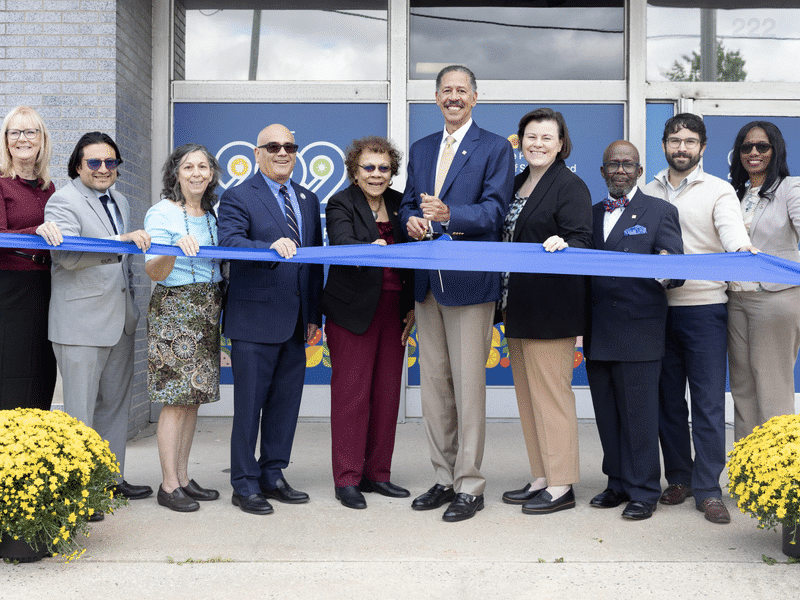
Robbinsville High School students’ team placed 6th of 52 countries in International Economics Olympiad
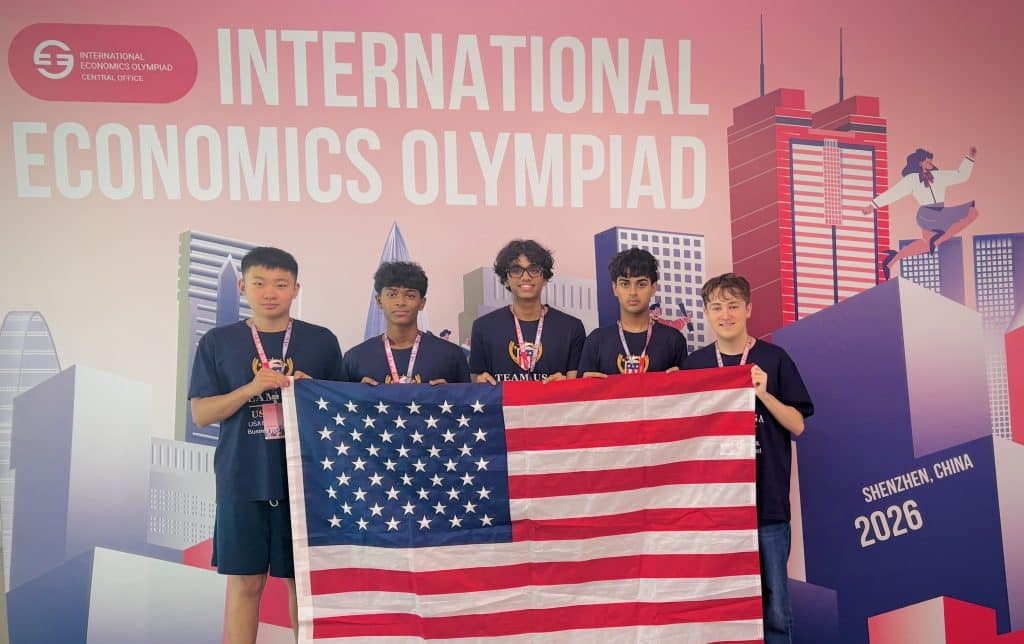
Shashank Madala, a rising senior at Robbinsville High School, recently returned from Shenzhen, China, where he was one of five students in the country selected to represent Team USA at the 2026 International Economics Olympiad (IEO).
The IEO is an annual competition for high school students interested in economics, business, and finance. Its activities are designed to develop creative problem-solving skills while fostering international collaboration among students. The Olympiad’s mission is to transform economics, finance, and business education through competition and collaboration. Participation is free of charge.
Teams consist of no more than five contestants and one or two team leaders. All contestants must be under the age of 20 during the year of the Olympiad.
This year marked the first time the United States competed in person. Team USA placed sixth out of 52 countries in the International Business Case Competition. In recognition of the team’s achievement, several New Jersey legislators, including Sen. Linda Greenstein, are issuing ceremonial resolutions.
“It was amazing,” Shashank said. “I would do it again if I could.”
Shashank and his teammates were given 24 hours to develop a business case presentation. The prompt was released at 6 a.m. and the completed presentation was due the following morning.
“We maybe slept one hour,” he said. “At the end, it was really worth it. Being in a room with other smart economists, you have to work through the ins and outs of economics—advanced economics, watching videos, taking notes and problem-solving.”
For Shashank, however, the greatest reward wasn’t the competition itself.
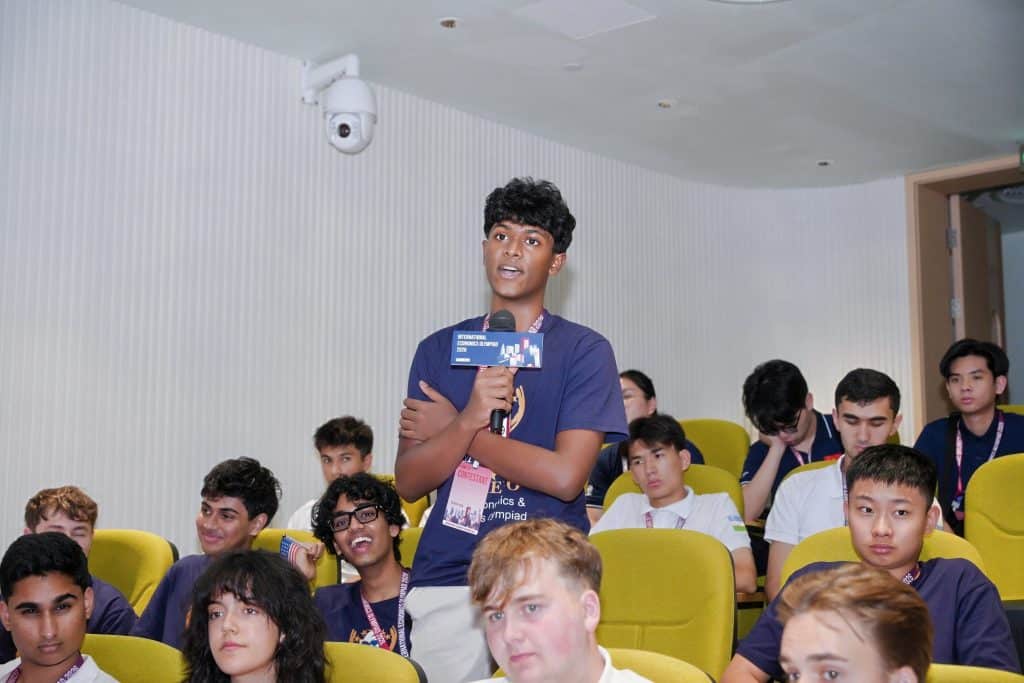
“I did so many positive things besides just winning,” he said. “The people I met were the biggest part of the competition. Meeting like-minded peers, not just from my country—I met hundreds of students from around the world. Being the youngest in the room really mattered. I felt out of place, and that helped me grow as a person.”
Although the competition was the priority, Shashank also had an opportunity to explore Shenzhen.
“It was a once-in-a-lifetime opportunity,” he said. “We went around the city shopping. It’s a really developed city with a lot of cool technology and museums. The people were very nice.”
Shashank’s interest in technology, business, and economics began during his freshman year of high school. Around that time, he visited family in India and saw firsthand that his 7-year-old cousin was struggling with autism.
“It gave me an internal drive to do something about it,” he said. “He was a sweet kid. We went to his house for dinner, and his parents had a hard time communicating with him. I talked to them about resources in India that could help develop his skills.”
That experience inspired Shashank to create KORA, an AI-powered app designed to support children with autism and their caregivers. He has raised more than $7,000 to continue developing the platform.
“I just came up with that name on the fly,” he said. “I wanted it to have some sort of meaning. Somewhere it has a meaning of ‘care.’ It was pretty cool.”
Shashank said he has always wanted to help others.
“We have a bunch of features,” he said. “You can post questions and get responses. We have that community aspect to the app. There are games for children to play with their caregivers to develop skills. You can enter a ZIP code to find doctors, physicians, autism centers and other resources for parents.”
The app is still under development.
“I’ve managed to get three or four developers,” he said. “That’s been a big part of my high school journey.”
While building KORA, Shashank realized there is also a significant gap in AI literacy.
“It’s a big part of everyone’s life,” he said.
That realization led him to create Lumin, a nonprofit organization that teaches students and educators how to use artificial intelligence responsibly and effectively. According to Shashank, Lumin has reached more than 15,000 students and teachers.
As he enters his senior year at Robbinsville High School, Shashank hopes to continue exploring ways to support children with autism while pursuing his passion for startups.
Shortly after returning from China, he traveled to California to attend Y Combinator’s Startup School 2026. He was selected from more than 30,000 applicants to participate in the program, where aspiring entrepreneurs met with startup founders and heard from notable CEOs in San Francisco.
“I essentially met with other people who want to do startups,” he said.
In his free time, Shashank enjoys playing tennis and pickleball and spending time reading.