Salvation and Social Justice secures a half-million-dollar grant for new youth pilot
Mercer County recently awarded the Trenton-based organization, Salvation and Social Justice, $500,000 for a 2-year Restorative Justice Hub pilot. The hub will coordinate with schools, families, and organizations to offer mentorship and resources to struggling youth.
Through the Restorative Justice Hub, Salvation and Social Justice’s commitment to providing immediate restorative and wellness services to adults in the Trenton area will now expand to include additional services for youth and young adults. Dontae Thomas, the violence intervention supervisor for the Trenton Restorative Street Team, said, “Many of the young people are dealing with the same trauma as the older people.”
Currently, the hub services an average of 30 youth per day, and the additional funding will allow the nonprofit to offer more services and increase outreach. Coleta Walker, the coordinator for the restorative justice hub, who has done violence prevention work in Newark and the Bronx, expects to see the number of youth ages 12 to 26 going to the hub double during the warmer months. “We want to give the youth a place to go,” said Walker.

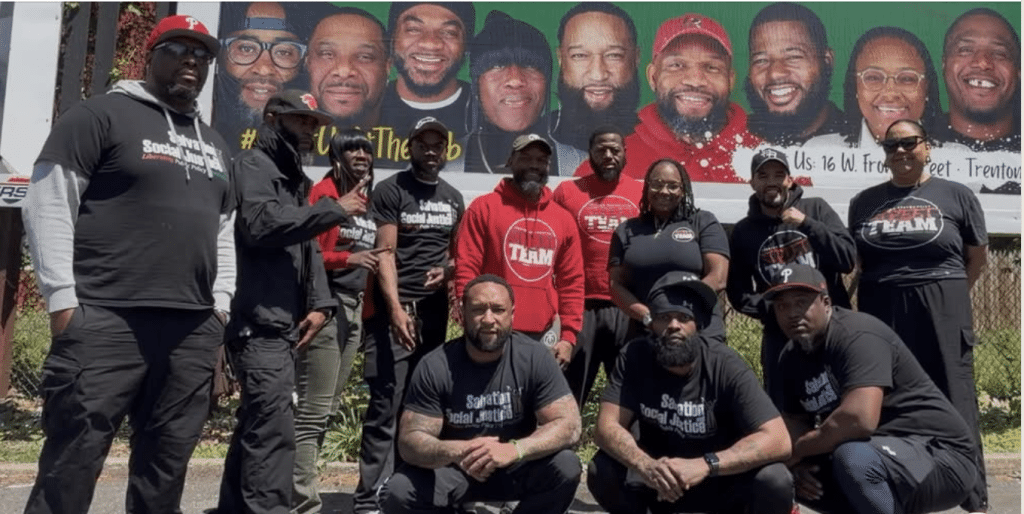
One organization the Restorative Justice Hub plans to work with is the Trenton Restorative Street team, another one of Salvation and Social Justice’s initiatives that, along with other community-based organizations, has led to a recent decrease in crime in Trenton.
The Street Team is composed of community members, many of whom have been previously incarcerated or suffered from the same trauma as the people they help. Thomas comes from a similar background; he was incarcerated in federal prison for over 10 years for drug dealing. He said his experience in the streets gives him “credibility.”
The Restorative Justice hub and Salvation and Social Justice as a whole use a restorative model, focusing on crime prevention rather than punishment. The organization believes crime is due to poverty, trauma, and lack of resources; they hope to rectify those issues.
Walker shared an example of crime prevention with the Trenton Journal. While working with a street team in the Bronx, the team visited a school because two students, a 13-year-old and a 14-year-old, were acting strangely in class after ingesting edibles from a nearby bodega. The street team went to the bodega to make sure they weren’t selling adult products to young people anymore.

An example highlighting the need for crime prevention, which gets to the root of the problems that cause crime: an estimated 84% of youth in juvenile facilities reported using drugs, and 76% reported using alcohol, according to the Bureau of Justice Statistics.
“The youth prisons in NJ spend $600,000 a year to incarcerate each young person that is there,” said Rev. Dr. Charles Boyer, founder of Salvation and Social Justice. “We fought to have resources moved from New Jersey’s youth prison industrial complex to projects like these, which are far less expensive, $500,000 to service several hundred youth.”
Boyer plans to keep fighting. “We will certainly be looking to advocate with partners and other hubs, advocating to the state for an additional time period, making this a part of the funding infrastructure of the state.”