Trenton needs a manager, not another storyteller
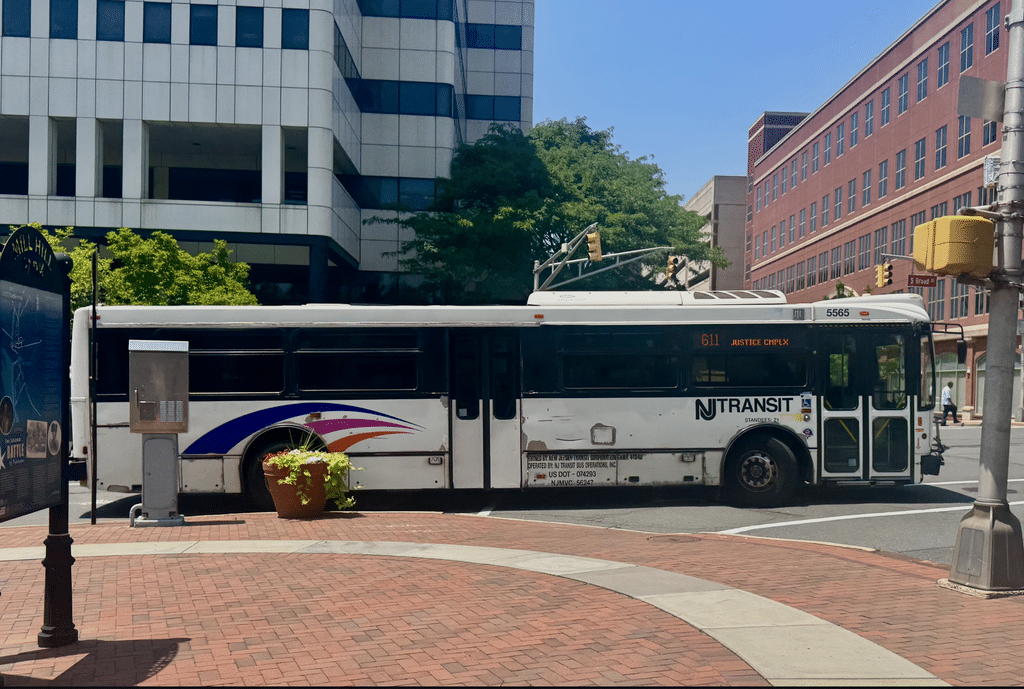
I chose Trenton because of the neighborhood. Mill Hill made sense: a real community, and close enough to New York and Philadelphia that the commute never dictated my life. Eighteen years later, I still believe that logic holds, and I love this city. But I’ve been disappointed by the lack of vision from the administrations that have served Trenton in that time. I’ve paid property taxes here every year since 2008. I am also, as of today, an undecided voter, because I’ve watched enough promises to know they aren’t the same thing as management. Now there’s another election, and a real chance to do the work that brings more life back to this city. The next mayor doesn’t need another vision statement. Trenton needs a manager who can run water, roads, and a budget competently, and who can point to a real plan for downtown instead of a slogan.
Water works and basic services: the baseline, not a bonus
A functioning water system isn’t a civic amenity; it’s the floor. Last year, the state’s own environmental regulators put it in writing: Trenton Water Works remains at extremely high risk of systemic failure, citing deteriorating infrastructure, poor management, and decades of underinvestment. This system serves roughly 225,000 people across Trenton and four surrounding townships, has been under state DEP oversight since 2022, and an independent engineering review found chronic deterioration and vulnerabilities that threaten its basic operation.
This winter, that stopped being a report on a shelf. Falling reservoir levels and repeated main breaks, including one that knocked out a major intersection for months, pushed emergency planners to prepare for a possible water shutdown. And we’re already paying more for a system the state says could still fail: TWW’s own capital plan bakes in 14% rate hikes in 2024, 2025, and 2026, then 4% more in 2027 and 2028. I don’t care whether the eventual fix is city-run or a regional authority. I care whether the next mayor treats this as the emergency it is, with a public timeline and visible capital work, not as a jurisdictional turf fight to win.
The same standard applies to roads, streetlights, and parks. These aren’t extras a city earns the right to after the “real” priorities. They’re what a functioning local government does by default, and Trenton residents have had to file the same pothole complaints year after year for basic upkeep that should be routine.
Fiscal accountability: show me the numbers, not the press release
Trenton is structurally strained: roughly 52% of the city’s parcels are tax-exempt, which means a shrinking taxable base is asked to carry more of the load every year. That’s not something any mayor invented, and any honest op-ed has to admit it. But it’s precisely why discretionary spending needs to be transparent and disciplined, not looser.
This year’s budget hit $315.4 million, up $34.1 million from the prior year. When the state trimmed Trenton’s requested transitional aid by roughly $1.7 million, the response was to pass that gap straight to residents as a 2% levy increase, about 15 cents more per $100 of assessed value. Council members pushed back, arguing they should see state aid negotiations and administration spending priorities before a budget lands in front of them for a vote, not after. That’s not an unreasonable ask; it’s the minimum for a legislative body that’s supposed to be checking the executive, not rubber-stamping it. Trenton also depends on state aid in a big way: $50.5 million in direct aid this fiscal year, the highest level in years, which makes it even more important that residents can see where the locally raised dollars go, not just the state’s.
I don’t want a mayor who explains a shortfall after the fact. I want one who publishes a capital plan with dates and dollar figures for water, roads, and parks, and who lets the council and residents see the state aid math before the budget vote, not after the levy increase is already baked in.
A real economic development plan for downtown, not just the state doing our job for us
Here’s what troubles me most: the most visible recent investment in downtown Trenton isn’t coming from the city. It’s coming from the state. The Capital City Redevelopment Corporation, a state entity, is the one running a $1.7 million fund to rehab vacant downtown buildings and a $1.25 million grant program to activate downtown storefronts and street life. Meanwhile, the city’s own long-standing goal has been to address 1,000 vacant and abandoned properties through rehabilitation and demolition, a target that’s been on the books for years, funded in part by state housing dollars.
The city’s own planning documents concede the deeper problem: downtown’s retail market is defined by real gaps between the demand that exists and the businesses actually there, and the waterfront remains disconnected, dominated by highway infrastructure and underused surface parking lots. None of that is news to anyone who walks Warren or Broad Street. What’s missing isn’t another study (Trenton has produced plenty of those); it’s a mayor who treats downtown revitalization as core operational work with its own accountable timeline, the same way water and roads should be, instead of ceding the momentum to state redevelopment vehicles and calling that progress.
Where the candidates are falling short
Watch the campaign so far, and you’ll notice what’s missing: TWW barely registers as a top-tier issue on the stump. Candidates will mention it in passing, alongside a dozen other priorities, when it should be the first thing out of anyone’s mouth who wants this job. A utility one state report away from catastrophic failure isn’t a talking point to work into a stump speech; it’s the emergency that should be organizing a candidate’s entire first hundred days. If a campaign can’t lead with that urgency now, I have no reason to believe it will lead with it in office.
That points to a harder problem. Running a city this size, a $315 million-plus budget, a water utility serving a quarter-million people, a workforce spread across public safety, public works, and everything in between, is an executive management job before it’s anything else. Several of the people running have never run a business, managed a large organization, or even led a single city department. Charisma and good intentions don’t balance a budget or keep a filtration plant online. I want to see a resume that includes actually managing people, money, and operations at scale, not just a platform.
What I’m actually looking for on the ballot
I’m not asking for a visionary. I’ve watched vision get funded well ahead of execution in this city before. I’m asking for a manager: someone with a real track record of running something complicated, who will treat TWW as the five-alarm priority it is on day one, defend a budget line by line in public, and turn the downtown plans already sitting in a drawer into dated, funded projects. Whoever wins in November inherits a water system the state says is at extremely high risk of systemic failure, a budget that keeps growing while residents absorb the gaps, and a downtown whose most recent wins were engineered by the state, not the city. Show me that competence, in public, with numbers I can check, and I’ll stop being undecided.
Leticia Williams is a lifelong New Jersey resident who has called Trenton’s Mill Hill neighborhood home since buying there in 2008. Over a 25-year career, she worked as a business journalist covering the federal government and Congress before spending the past 15 years as a client services executive at Vanguard. She has served on the boards of I Am Trenton and ArtWorks, and currently serves on the board of Passage Theatre.