The Fibonacci Effect: Building Trenton’s Learning Sequence
I recently visited Sprout U School of the Arts here in Trenton. It is an extraordinary place where young people are encouraged to explore music, dance, theater, academics, and the world around them.
During my visit, I talked with students about the Fibonacci sequence — the mathematical pattern 0, 1, 1, 2, 3, 5, 8, 13, 21, 34… in which each number builds upon the numbers that came before it, and which appears throughout mathematics, art, and nature.
Why does this matter? Because a child growing up in Trenton should have those conversations just as much as a child the same age growing up in Princeton. Our expectations should be no different.
Every child should be exposed to mathematics, science, literature, history, music, and art — not simply because those subjects may appear on a test, but because learning opens up the world. It teaches a child to be curious, to ask questions, to recognize patterns and possibilities, and eventually to imagine a future beyond what he or she can see today.
And education cannot begin when a child walks through the schoolhouse door and end when the dismissal bell rings. Parents and families have an indispensable role. We need parents reading with their children, asking what they learned that day, taking them to the library, talking about the world around them, and making clear that education matters.
But simply telling parents to “get involved” isn’t enough. We should also be asking what we can do to help parents become more involved and give them the tools to do it. There is an early-learning model called HIPPY — Home Instruction for Parents of Preschool Youngsters — that began in Israel and has since spread internationally. Its premise is remarkably simple: parents are a child’s first teachers.
Instead of assuming every parent automatically knows how to teach a three-, four- or five-year-old, HIPPY gives parents activities, books and guidance they can use at home to help prepare their children for school. There is something important in that model for Trenton.
We shouldn’t lecture parents about being more involved. We should give them the tools to be involved. We should help families make reading, numbers, language, music and simple conversations about the world part of everyday life — starting long before kindergarten.
WHERE CITY HALL FITS
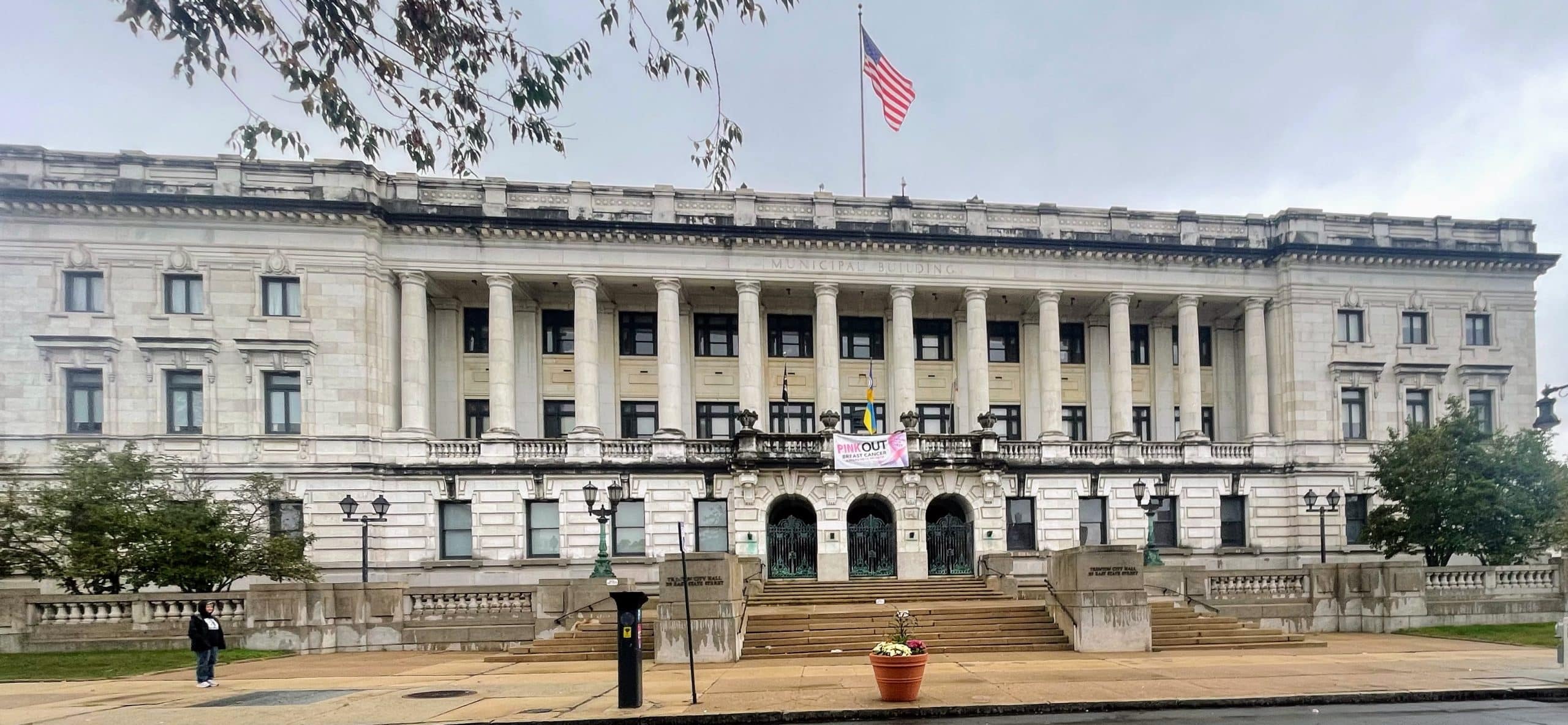
There has been criticism over the years that City Hall doesn’t do enough when it comes to education. Some of that criticism overlooks an important distinction in how public education is governed in Trenton. Trenton City Hall does not run the Trenton Public Schools.
Our school system is governed by an independently elected Board of Education. The Mayor and City Council do not hire the superintendent, establish the curriculum, negotiate teacher contracts, or manage the day-to-day operation of our schools.
I agree, however, that this distinction should never become an excuse for City Hall to say, “Education isn’t our job.” It is everyone’s job. Our responsibility is to support our young people in the places where municipal government can make a difference and to collaborate with our schools wherever we can. That’s why the City has invested in parks, pools and recreation centers that give children safe places to learn, play and grow.
It’s why we hire approximately 200+ young people each summer to work in our parks, pools and summer programs. For many young people, that is an introduction to the responsibilities and rewards of a first job — showing up on time, working with a supervisor, earning a paycheck, and understanding that other people are depending upon you. That’s education too.
It’s why our Police and Fire Departments operate Summer Public Safety Academies, introducing young Trentonians to public service, discipline, teamwork, and potential careers.
It’s why I sit down each month with students in Trenton Central High School’s communications program to produce a podcast. The students aren’t simply being interviewed. They are learning the craft of communications, developing questions, operating in a professional setting, and engaging directly with the issues affecting their city. I may be the mayor sitting behind the microphone, but the real purpose is giving students another opportunity to practice what they’re learning.
And it’s why we work to provide safe passage to and from school, including the involvement of our crossing guards, Street Teams, and other public-safety partners. A child who doesn’t feel safe getting to school faces a barrier to learning before the first bell even rings. Sometimes City Hall can also fill a gap that the traditional education system simply isn’t designed to fill.
When the new Trenton Central High School was constructed, the New Jersey Schools Development Authority’s responsibility was principally the school facility itself. The City helped provide the turf athletic field, recognizing that a modern high school should be more than brick and mortar. Students also deserve places to compete, exercise, build friendships, and learn teamwork.
And my involvement with the high school predates my service as mayor. As an Assemblyman, I worked with others in our community to reverse Governor Chris Christie’s decision to withdraw funding for rebuilding Trenton Central High School. These things may not appear in a school curriculum. But they are part of an education partnership with City government.
A summer job teaches responsibility. Athletics teach teamwork. Recreation provides children with a constructive place to spend their time. A Public Safety Academy can introduce a teenager to a career he or she has never considered. Safe passage makes it possible for a child to arrive at school ready to learn. And working on a podcast can turn something learned in a communications classroom into a real-world experience.
None of this diminishes the responsibility of our schools or our parents. It recognizes something larger: Educating a child is a shared responsibility. The School Board has a role. Teachers have a role. Parents have a role. City Hall has a role. Our nonprofits, churches, businesses, and neighborhoods have roles as well.
And in a city like Trenton, those pieces have to work together.
STARTING EVEN EARLIER
That’s why I believe City Hall should look for another way to help. New Jersey already supports HIPPY, the home-learning program I mentioned earlier. But HIPPY is not currently operating in Trenton. Fortunately, we are not starting from scratch.
Mercer Street Friends already does important work with Trenton families through home-visiting programs including Parents as Teachers, while the Children’s Home Society of New Jersey provides Early Head Start and home-based services to young children and their parents. Mercer Street Friends has also opened food pantries at community schools, recognizing another basic truth: children cannot be expected to learn when their nutritional needs are not met. We should build upon that good work, not duplicate it.
City Hall has limited resources, and municipal taxpayers should not be expected to assume financial responsibilities that properly belong elsewhere. But one thing a mayor and a city government can do is bring people together and advocate for resources.
I would like the City to work with Mercer Street Friends, Children’s Home Society, the Trenton Public Schools, and the State of New Jersey to seek funding for a HIPPY pilot program in Trenton — supplementing the programs that already exist and reaching more families with young children. By pursuing state and federal grant opportunities and working with our community nonprofit partners, we can expand opportunities for parents and children to learn together at home.
Start with a group of Trenton families. Give parents books, age-appropriate learning activities, and support. Learn what works. Measure the results. And if it succeeds, seek the resources to reach more families. That is an appropriate role for City Hall in education: not trying to run the schools, but bringing people and resources together to give Trenton children more opportunities to succeed.
BACK TO FIBONACCI
Which brings me back to my conversation with those students about Fibonacci. The earliest steps in a child’s education can seem very small. A parent reading a book with a three-year-old. Counting objects around the kitchen table. Identifying shapes on a walk through the neighborhood. Visiting the library. Listening to music together. Or simply taking the time to answer a child’s seemingly endless questions about how the world works. One experience leads to another. Learning builds upon learning. Curiosity builds upon curiosity. Opportunity builds upon opportunity.
The child who learns to enjoy a book wants to read another one. The child who discovers numbers begins to recognize patterns. The child who learns about music may pick up an instrument. The teenager who gets a summer job begins to understand responsibility. The student who works on a podcast begins to imagine a career in communications.
Just like the Fibonacci sequence, what comes next is built upon what came before it. Our job — as parents, educators, government, and a community — is to make sure those first opportunities are there. Because whether a child is growing up in Trenton or Princeton, the curiosity of that child is just as valuable, the potential is just as great, and our expectations should be just as high.
W. Reed Gusciora is the 49th Mayor of the City of Trenton