We must go to the root: urban traumatic stress
I have spent the last several days reflecting deeply on what I heard, witnessed, and felt at the extraordinary gathering convened by Rev. Dr. Charles F. Boyer and Salvation and Social Justice at Greater Mount Zion AME Church.
We heard powerful voices from government, faith, public safety, and grassroots organizations, including our Governor, the New Jersey Attorney General, Rev. Boyer, Trenton Mayor Reed Gusciora, Congresswoman Bonnie Watson Coleman, Newark Mayor Ras Baraka, and many extraordinary community leaders.
I heard important conversations about public safety, violence prevention, mental health, policing, education, poverty, young people, reentry, and hope. I left encouraged. And I want to state clearly: I fully support Rev. Boyer’s call for the City of Trenton to establish an Office of Violence Prevention.
Trenton needs permanent infrastructure focused on preventing violence – not simply responding after another person has been shot, traumatized, arrested, incarcerated, or buried. But after reflecting on everything I heard, something has continued turning in my spirit. There is still a missing ingredient. We must go deeper.
If we truly want to break cycles of violence, we must stop addressing only what people do and begin understanding what happened inside the human being before the violence occurred. That is why my call for the Trenton Covenant of Peace Coalition Summit – From Trauma to Transformation – Addressing Urban Traumatic Stress stands stronger today than ever. The Summit cannot simply become another conference where good people discuss violence. It must confront violence at its root.
For decades, we have asked: Who pulled the trigger? Who joined the gang? Who committed the crime? Who should be arrested? Accountability matters. Public safety matters. Law enforcement matters. But prevention requires another question: What happened to that human being before we encountered them at the moment of their worst decision?
What trauma did they experience? What fear, rejection, abandonment, abuse, or hopelessness shaped their thinking? Who taught them how to process anger, resolve conflict, value themselves, and value another human life? These questions do not excuse violence. They help us understand how to prevent it. This is where urban traumatic stress and human development must become central to our conversation.
Psychologist Dr. Maysa Akbar’s “Urban Trauma Stress” work examines the effects of history, biology, and environment and discusses characteristics including anger, mistrust, fear, and rejection. Her work challenges us to look beneath destructive behavior and understand the trauma, environment, and intergenerational pain that can surround it.
Because behavior may be the symptom while the root remains buried. Behind anger may be pain. Behind aggression may be fear. Behind mistrust may be betrayal. Behind rejection may be abandonment. And behind violence may be years of unresolved trauma.
We cannot arrest trauma. We cannot prosecute hopelessness. We cannot incarcerate childhood pain out of existence. And we cannot expect children who have spent years learning how to survive chaos to suddenly know how to live peacefully because adults tell them to “make better choices.”
If we want different choices, we must develop different thinking. That is why the Covenant of Peace must go beyond traditional life skills and address human development. We must bring government, law enforcement, educators, mental-health professionals, clergy, parents, grassroots organizations, returning citizens, credible messengers, and young people to the same table.
We need professionals with degrees, but we also need people with lived experience. Bring us the mother who buried her child. Bring us the returning citizen who can explain what prison changed, and what it did not. Bring us the teacher who watches trauma enter the classroom. Bring us the young man who once carried a gun and can explain why. And bring our young people – not merely as an audience, but as part of the solution.
This is why an Office of Violence Prevention and the Covenant of Peace should complement one another. The Office can provide permanent infrastructure, coordination, and accountability. The Covenant of Peace can take us deeper – into trauma, thinking, human development, healing, and transformation.
One strengthens the system. The other must reach the human being. Trenton needs both. I love this city. I have celebrated with its families and mourned with its families. I have witnessed people refuse to abandon neighborhoods others had written off. That is why I refuse to accept violence as Trenton’s destiny. We cannot continue managing tragedy. We must transform the conditions producing it.
If we continue cutting the branches of violence while leaving its roots buried, those branches will grow again. But if we expose the root, understand it, and transform the conditions feeding it, we can begin breaking cycles that have survived for generations. That is not being soft on violence. That is becoming serious about preventing it.
That is the Covenant we owe Trenton: Trenton Covenant of Peace Coalition Summit – From Trauma to Transformation – Addressing Urban Traumatic Stress
A Covenant of Peace.
A Covenant of Healing.
A Covenant of Human Development.
And above all, a covenant to fight for human life before we are forced to mourn another one.
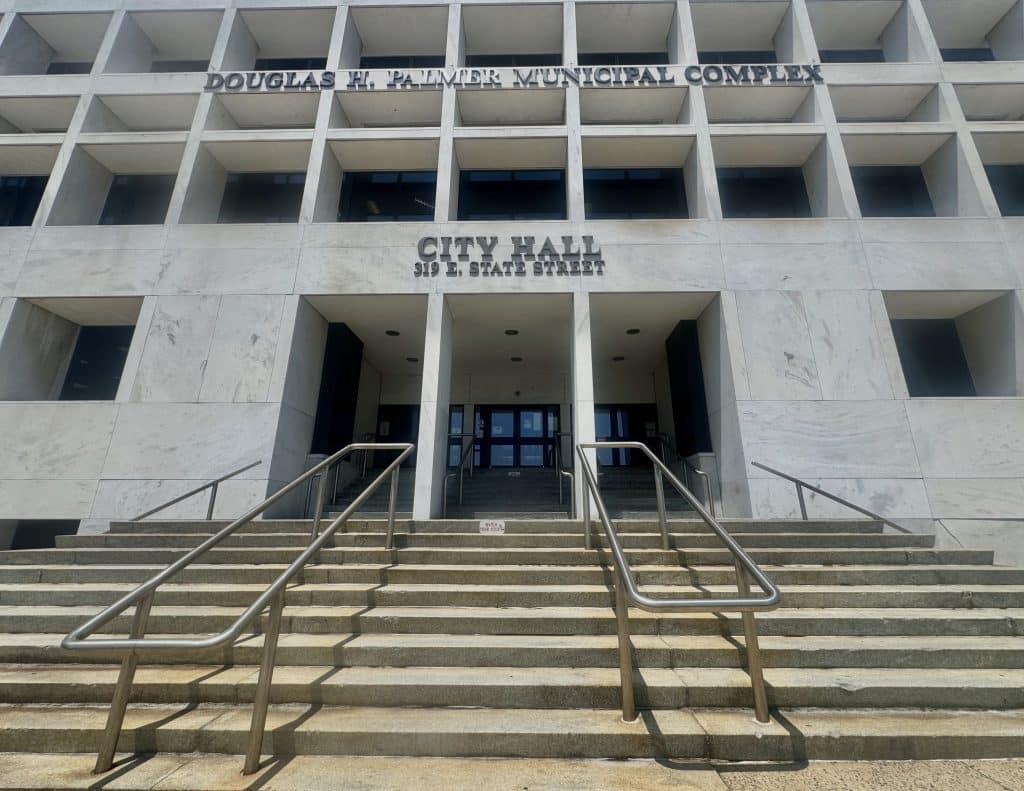
This op-ed was written by Douglas H. Palmer, former Mayor City of Trenton, New Jersey